MENU

Bibliography Options Menu

The Electronic Scholarly Publishing Project: Providing world-wide, free access to classic scientific papers and other scholarly materials, since 1993.
More About: ESP | OUR CONTENT | THIS WEBSITE | WHAT'S NEW | WHAT'S HOT
ESP: PubMed Auto Bibliography 23 Oct 2026 at 02:01 Created:
Sociobiology
Sociobiology is a field of scientific study that is based on the hypothesis that social behavior has resulted from evolution and attempts to examine and explain social behavior within that context. Sociobiology investigates social behaviors, such as mating patterns, territorial fights, pack hunting, and the hive society of social insects. It argues that just as selection pressure led to animals evolving useful ways of interacting with the natural environment, it led to the genetic evolution of advantageous social behavior. While the term "sociobiology" can be traced to the 1940s, the concept did not gain major recognition until the publication of Edward O. Wilson's book Sociobiology: The New Synthesis in 1975.
Created with PubMed® Query: sociobiology NOT pmcbook NOT ispreviousversion
Citations The Papers (from PubMed®)
RevDate: 2026-10-14
Elevational melanism in East African Honey Bees involves a Major-Effect locus.
Genome biology and evolution pii:8915681 [Epub ahead of print].
Thermal melanism, whereby darker pigmentation occurs in colder environments, is a widespread pattern, yet its genetic and physiological basis in eusocial insects remains poorly understood. East African honey bees (Apis mellifera) occupy elevational gradients in which highland populations are darker, larger, and more cold tolerant than lowland conspecifics. Here, we integrated population genomics, structural variations, and functional genomics to investigate elevational melanism. We sampled, phenotyped and resequenced 139 workers from five East African mountain systems. A genome wide association study identified 977 Single Nucleotide Polymorphisms (SNPs) significantly associated with abdominal pigmentation, with a single, peak at the ebony ortholog AmEbony on chromosome 1. Allelic variation at AmEbony formed three genetic clusters tracking a continuous pigmentation gradient, and 77 divergent SNPs (DXY = 1) almost perfectly discriminated dark from light bees. Two inversions (r7, r9), previously linked to high elevation adaptation, were detected across additional mountain systems and enriched in dark, highland genomic backgrounds, but did not replace AmEbony as the primary pigmentation locus. CRISPR/Cas9 disruption of AmEbony in A. m. carnica produced darker adults in a qualitative comparison, supporting a conserved role in pigmentation. Head RNA-seq and GENIE3 analysis identified recurrent genotype-associated modules involving oxidoreductase activity and odorant binding. Because population structure covaries with elevation and pigmentation, the GWAS supports AmEbony as a major-effect locus but cannot identify causal variants. Similarly, head-expression data identify molecular changes associated with AmEbony disruption, but cannot establish whether they contribute to pigmentation or whether naturally segregating East African alleles act through the same pathways.
Additional Links: PMID-42870575
Publisher:
PubMed:
Citation:
show bibtex listing
hide bibtex listing
@article {pmid42870575,
year = {2026},
author = {Mazzoni, M and Loidolt, F and Kersten, S and Otieno, M and Njovu, H and Lasway, JV and Scheiner, R and Hasselmann, M},
title = {Elevational melanism in East African Honey Bees involves a Major-Effect locus.},
journal = {Genome biology and evolution},
volume = {},
number = {},
pages = {},
doi = {10.1093/gbe/evag260},
pmid = {42870575},
issn = {1759-6653},
abstract = {Thermal melanism, whereby darker pigmentation occurs in colder environments, is a widespread pattern, yet its genetic and physiological basis in eusocial insects remains poorly understood. East African honey bees (Apis mellifera) occupy elevational gradients in which highland populations are darker, larger, and more cold tolerant than lowland conspecifics. Here, we integrated population genomics, structural variations, and functional genomics to investigate elevational melanism. We sampled, phenotyped and resequenced 139 workers from five East African mountain systems. A genome wide association study identified 977 Single Nucleotide Polymorphisms (SNPs) significantly associated with abdominal pigmentation, with a single, peak at the ebony ortholog AmEbony on chromosome 1. Allelic variation at AmEbony formed three genetic clusters tracking a continuous pigmentation gradient, and 77 divergent SNPs (DXY = 1) almost perfectly discriminated dark from light bees. Two inversions (r7, r9), previously linked to high elevation adaptation, were detected across additional mountain systems and enriched in dark, highland genomic backgrounds, but did not replace AmEbony as the primary pigmentation locus. CRISPR/Cas9 disruption of AmEbony in A. m. carnica produced darker adults in a qualitative comparison, supporting a conserved role in pigmentation. Head RNA-seq and GENIE3 analysis identified recurrent genotype-associated modules involving oxidoreductase activity and odorant binding. Because population structure covaries with elevation and pigmentation, the GWAS supports AmEbony as a major-effect locus but cannot identify causal variants. Similarly, head-expression data identify molecular changes associated with AmEbony disruption, but cannot establish whether they contribute to pigmentation or whether naturally segregating East African alleles act through the same pathways.},
}
RevDate: 2026-10-10
CmpDate: 2026-10-10
Spontaneous behavior predicts colony membership, individual identity, and rank in naked mole-rat societies.
bioRxiv : the preprint server for biology pii:2026.09.27.754730.
Animal societies are organized across scales, from moment-to-moment actions of individuals to dynamic group structure. A central challenge in sociobiology is to understand how behaviors of individuals shape group structure. Here, using machine vision to map recurrent fine-scale behavioral modules in the eusocial naked mole-rat (Heterocephalus glaber), we show that spontaneous behavior in isolation predicts group-level social organization, including colony membership and individual identity. We determined dominance relationships and found highly linear hierarchies, with ranks stable over months to years. Remarkably, fine-scale behavioral profiles in isolation correctly predicted pairwise dominance relationships, allowing reconstruction of rank order within each colony. Models trained within one colony predicted rank poorly in others, suggesting that naked mole-rats express social position through behavioral patterns specific to each colony. Together, our results connect fine-scale behavior to social structure maintained over years and show that, even when an animal is alone, its behavior carries signatures of its identity, colony, and place within that society.
Additional Links: PMID-42856182
Full Text:
Publisher:
PubMed:
Citation:
show bibtex listing
hide bibtex listing
@article {pmid42856182,
year = {2026},
author = {Haba, Y and Schwark, R and Weinreb, C and Ogundare, S and Foster, W and Tsai, YW and Lyu, J and Mohamed, M and Chang, P and Arnold, A and Schaffer, E and Rajan, K and Datta, SR and Abdus-Saboor, I},
title = {Spontaneous behavior predicts colony membership, individual identity, and rank in naked mole-rat societies.},
journal = {bioRxiv : the preprint server for biology},
volume = {},
number = {},
pages = {},
doi = {10.64898/2026.09.27.754730},
pmid = {42856182},
issn = {2692-8205},
abstract = {Animal societies are organized across scales, from moment-to-moment actions of individuals to dynamic group structure. A central challenge in sociobiology is to understand how behaviors of individuals shape group structure. Here, using machine vision to map recurrent fine-scale behavioral modules in the eusocial naked mole-rat (Heterocephalus glaber), we show that spontaneous behavior in isolation predicts group-level social organization, including colony membership and individual identity. We determined dominance relationships and found highly linear hierarchies, with ranks stable over months to years. Remarkably, fine-scale behavioral profiles in isolation correctly predicted pairwise dominance relationships, allowing reconstruction of rank order within each colony. Models trained within one colony predicted rank poorly in others, suggesting that naked mole-rats express social position through behavioral patterns specific to each colony. Together, our results connect fine-scale behavior to social structure maintained over years and show that, even when an animal is alone, its behavior carries signatures of its identity, colony, and place within that society.},
}
RevDate: 2026-09-02
CmpDate: 2026-09-02
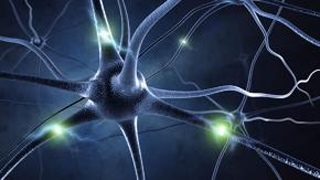
Form informs function: innervation patterns of projection neurons correspond to response profiles of mushroom body output neurons during olfactory-visual integration.
Frontiers in physiology, 17:1898182.
Several studies have shown that honeybees have a remarkable ability to detect, learn, and discriminate different floral qualities such as colour patterns and odour bouquets. However, how they integrate this multi-sensory information at the neuronal level is less understood. The sites for multi-sensory convergence in honeybees and other insects are the mushroom bodies (MB). In this study, we focus on MB output neurons (MBON) to examine how different MBONs process olfactory, visual, and olfactory-visual compound stimuli using extracellular multi-unit recordings. By analysing functional responses, we defined three MBON subpopulations: "bimodal", "unimodal light", and "unimodal odour". All three groups exhibit compound-mediated modulation in both directions, meaning that compared to the unimodal response, the response strength to the compound can be either higher or lower. This suggests the presence of a separate compound-activated pathway, especially for unimodal MBONs. Comparing our results to the morphology of the MB input regions, the calyces, which are both divided into the lip (olfaction), collar (vision), and the basal ring (bimodal), we provide evidence that the latter region might play a key role in compound signalling. By establishing a model based on information flow through the MB circuitry, we reproduced the functional phenotypes exhibited by the different MBON types.
Additional Links: PMID-42682966
PubMed:
Citation:
show bibtex listing
hide bibtex listing
@article {pmid42682966,
year = {2026},
author = {Aliyam Veetil Zyndheen, AA and Nicolaidou, AR and Groh, C and Dürr, V and Rössler, W and Strube-Bloss, M},
title = {Form informs function: innervation patterns of projection neurons correspond to response profiles of mushroom body output neurons during olfactory-visual integration.},
journal = {Frontiers in physiology},
volume = {17},
number = {},
pages = {1898182},
pmid = {42682966},
issn = {1664-042X},
abstract = {Several studies have shown that honeybees have a remarkable ability to detect, learn, and discriminate different floral qualities such as colour patterns and odour bouquets. However, how they integrate this multi-sensory information at the neuronal level is less understood. The sites for multi-sensory convergence in honeybees and other insects are the mushroom bodies (MB). In this study, we focus on MB output neurons (MBON) to examine how different MBONs process olfactory, visual, and olfactory-visual compound stimuli using extracellular multi-unit recordings. By analysing functional responses, we defined three MBON subpopulations: "bimodal", "unimodal light", and "unimodal odour". All three groups exhibit compound-mediated modulation in both directions, meaning that compared to the unimodal response, the response strength to the compound can be either higher or lower. This suggests the presence of a separate compound-activated pathway, especially for unimodal MBONs. Comparing our results to the morphology of the MB input regions, the calyces, which are both divided into the lip (olfaction), collar (vision), and the basal ring (bimodal), we provide evidence that the latter region might play a key role in compound signalling. By establishing a model based on information flow through the MB circuitry, we reproduced the functional phenotypes exhibited by the different MBON types.},
}
RevDate: 2026-09-02
Free Ammonia Stress Rewires Microbial Signaling Networks and Constrains Metabolic Cooperation in Oxygenic Photogranules.
The ISME journal pii:8780322 [Epub ahead of print].
Free ammonia (FA) is a prevalent chemical inhibitor in wastewater ecosystems, yet its ecological impacts on microbial communication and cooperation remain poorly understood. Here, we demonstrated that FA stress restructured the community function of oxygenic photogranules (OPGs) by rewiring signaling-associated regulatory networks and redirecting cellular energy allocation. Temporal profiling of extracellular signaling molecules and intracellular regulatory molecules, integrated with metagenomic and metatranscriptomic analyses, revealed a concentration-dependent reconfiguration of microbial signaling. Under low FA exposure (≤ 1.0 mg/L), diffusible signal factor (DSF)- and indole-3-acetic acid (IAA)-associated pathways were more active, coinciding with photogranules consolidation and efficient nitrogen removal. At moderate FA stress (5.0 mg/L), the regulatory landscape shifted toward acyl-homoserine lactone (AHL)-associated signaling and bis-(3'-5')-cyclic dimeric guanosine monophosphate (c-di-GMP)-mediated intracellular regulation, consistent with enhanced aggregation and stress adaptation. In contrast, severe FA stress (25.0 mg/L) broadly attenuated signaling-associated pathways, weakened metabolite cross-feeding networks, impaired energy generation, and increased maintenance-related energetic demands. Under these constraints, microbial populations appeared to shift from cooperative metabolism toward self-maintenance-oriented carbon metabolism, evidenced by activation of the carbon-efficient glyoxylate shunt. Collectively, these findings suggest that FA-induced signaling disruption constrains microbial cooperation through cellular energy limitation, highlighting energy allocation as a key determinant of microbial social stability in phototrophic wastewater microbiomes.
Additional Links: PMID-42685249
Publisher:
PubMed:
Citation:
show bibtex listing
hide bibtex listing
@article {pmid42685249,
year = {2026},
author = {Zhang, B and Xu, X and Zhang, M and Qi, B and Ma, H and Yan, P and Lens, PNL and Shi, W},
title = {Free Ammonia Stress Rewires Microbial Signaling Networks and Constrains Metabolic Cooperation in Oxygenic Photogranules.},
journal = {The ISME journal},
volume = {},
number = {},
pages = {},
doi = {10.1093/ismejo/wrag225},
pmid = {42685249},
issn = {1751-7370},
abstract = {Free ammonia (FA) is a prevalent chemical inhibitor in wastewater ecosystems, yet its ecological impacts on microbial communication and cooperation remain poorly understood. Here, we demonstrated that FA stress restructured the community function of oxygenic photogranules (OPGs) by rewiring signaling-associated regulatory networks and redirecting cellular energy allocation. Temporal profiling of extracellular signaling molecules and intracellular regulatory molecules, integrated with metagenomic and metatranscriptomic analyses, revealed a concentration-dependent reconfiguration of microbial signaling. Under low FA exposure (≤ 1.0 mg/L), diffusible signal factor (DSF)- and indole-3-acetic acid (IAA)-associated pathways were more active, coinciding with photogranules consolidation and efficient nitrogen removal. At moderate FA stress (5.0 mg/L), the regulatory landscape shifted toward acyl-homoserine lactone (AHL)-associated signaling and bis-(3'-5')-cyclic dimeric guanosine monophosphate (c-di-GMP)-mediated intracellular regulation, consistent with enhanced aggregation and stress adaptation. In contrast, severe FA stress (25.0 mg/L) broadly attenuated signaling-associated pathways, weakened metabolite cross-feeding networks, impaired energy generation, and increased maintenance-related energetic demands. Under these constraints, microbial populations appeared to shift from cooperative metabolism toward self-maintenance-oriented carbon metabolism, evidenced by activation of the carbon-efficient glyoxylate shunt. Collectively, these findings suggest that FA-induced signaling disruption constrains microbial cooperation through cellular energy limitation, highlighting energy allocation as a key determinant of microbial social stability in phototrophic wastewater microbiomes.},
}
RevDate: 2026-08-24
Fueling thermogenesis: An individual-level thermography assay reveals that sucrose ingestion promotes thermogenesis in honeybees.
The Journal of experimental biology pii:372633 [Epub ahead of print].
Western honeybees (Apis mellifera) are remarkable among insects for their ability to generate heat endogenously and maintain a stable hive microclimate. This process relies on the activity of the indirect flight muscles, but the direct relationship between thermogenesis and carbohydrate availability has not been systematically investigated. To investigate this relationship, we developed a controlled individual-level thermography assay that provides a standardized framework for studying honeybee thermogenesis at the individual level. Starved bees showed little or no thermogenesis, whereas sucrose-fed bees exhibited substantially increased thoracic temperatures and thermogenic activity, consistent with a threshold-like activation of thermogenesis. Additionally, thermogenic performance was significantly lower in bees fed a sucralose solution used as a putatively non-nutritive control than in bees that received the same volume of sucrose solution. Together, these findings support the hypothesis that thermogenesis depends on the availability of recently ingested carbohydrates.
Additional Links: PMID-42634438
Publisher:
PubMed:
Citation:
show bibtex listing
hide bibtex listing
@article {pmid42634438,
year = {2026},
author = {Delac, S and von Koschitzky, C and Thamm, M},
title = {Fueling thermogenesis: An individual-level thermography assay reveals that sucrose ingestion promotes thermogenesis in honeybees.},
journal = {The Journal of experimental biology},
volume = {},
number = {},
pages = {},
doi = {10.1242/jeb.252296},
pmid = {42634438},
issn = {1477-9145},
support = {TH2264/2-2//Deutsche Forschungsgemeinschaft/ ; },
abstract = {Western honeybees (Apis mellifera) are remarkable among insects for their ability to generate heat endogenously and maintain a stable hive microclimate. This process relies on the activity of the indirect flight muscles, but the direct relationship between thermogenesis and carbohydrate availability has not been systematically investigated. To investigate this relationship, we developed a controlled individual-level thermography assay that provides a standardized framework for studying honeybee thermogenesis at the individual level. Starved bees showed little or no thermogenesis, whereas sucrose-fed bees exhibited substantially increased thoracic temperatures and thermogenic activity, consistent with a threshold-like activation of thermogenesis. Additionally, thermogenic performance was significantly lower in bees fed a sucralose solution used as a putatively non-nutritive control than in bees that received the same volume of sucrose solution. Together, these findings support the hypothesis that thermogenesis depends on the availability of recently ingested carbohydrates.},
}
RevDate: 2026-08-16
CmpDate: 2026-08-16
Cumulative Early-Life Adversities Predict Short- and Long-Term Survival in a Critically Endangered Lemur (Propithecus verreauxi).
Ecology and evolution, 16(8):e74194.
Adversities in early life compromise fitness components later in life, but the cumulative effects of multiple adversities and their timing across the lifespan remain poorly understood. To contribute comparative data from an independent primate radiation, we leverage long-term demographic data from a wild lemur population to examine the effects of maternal loss, presence of an older sibling, maternal age, group size, temperature and rainfall on survival of 242 infants across the lifespan. We found that differently operationalized cumulative indices of early adversities predicted infant survival but did not predict survival better than single predictor models. Infant survival was reduced by maternal loss, the absence of an older sibling and large group size at death. Survival to adulthood and female longevity were positively associated with higher rainfall during infancy and negatively by larger group sizes at death; infant survival to adulthood also declined with increasing maternal age. Cumulative adversities early in life had no persistent negative long-term effects on survival, but sample sizes decreased in the older age classes. However, rainfall as a proxy for food availability in early life had long-term effects, with higher rainfall increasing the odds of survival to adulthood and female longevity. Hence, social and demographic adversities had stronger effects than environmental ones for early infant survival, but environmental effects in early life also appear to be important drivers of demography and life history in these critically endangered primates.
Additional Links: PMID-42604053
PubMed:
Citation:
show bibtex listing
hide bibtex listing
@article {pmid42604053,
year = {2026},
author = {Fichtel, C and Kappeler, PM},
title = {Cumulative Early-Life Adversities Predict Short- and Long-Term Survival in a Critically Endangered Lemur (Propithecus verreauxi).},
journal = {Ecology and evolution},
volume = {16},
number = {8},
pages = {e74194},
pmid = {42604053},
issn = {2045-7758},
abstract = {Adversities in early life compromise fitness components later in life, but the cumulative effects of multiple adversities and their timing across the lifespan remain poorly understood. To contribute comparative data from an independent primate radiation, we leverage long-term demographic data from a wild lemur population to examine the effects of maternal loss, presence of an older sibling, maternal age, group size, temperature and rainfall on survival of 242 infants across the lifespan. We found that differently operationalized cumulative indices of early adversities predicted infant survival but did not predict survival better than single predictor models. Infant survival was reduced by maternal loss, the absence of an older sibling and large group size at death. Survival to adulthood and female longevity were positively associated with higher rainfall during infancy and negatively by larger group sizes at death; infant survival to adulthood also declined with increasing maternal age. Cumulative adversities early in life had no persistent negative long-term effects on survival, but sample sizes decreased in the older age classes. However, rainfall as a proxy for food availability in early life had long-term effects, with higher rainfall increasing the odds of survival to adulthood and female longevity. Hence, social and demographic adversities had stronger effects than environmental ones for early infant survival, but environmental effects in early life also appear to be important drivers of demography and life history in these critically endangered primates.},
}
RevDate: 2026-08-15
Ravens (Corvus corax) use conspecifics and heterospecifics to navigate risky foraging scenarios.
Behavioral ecology : official journal of the International Society for Behavioral Ecology, 37(5):arag093.
Foraging animals need to balance the trade-off between the benefits of exploiting new resources and the unknown risks they entail. Changing environments are especially challenging, as this balance between risk and reward needs to be constantly reevaluated. One strategy animals, and in particular scavengers employ, is using conspecifics and heterospecifics as sources of information to access food. In this study, we focused on free-ranging ravens that habitually forage in a wildlife park together with heterospecifics (boars) and tested their responses to unfamiliar and unpredictable foraging situations. In the 2-sites experiment (E1), we presented them with a choice between an unfamiliar (new) and a familiar (old) foraging site; in the object experiment (E2), we presented them with an object, otherwise not seen in the wildlife park, positioned randomly next to 1 of the sites. In both experiments, we found that ravens delayed their initial approach until the boars reached the food. In E1, ravens took longer to approach the food; stole more food from conspecifics but visited in larger numbers at the new site compared with the old. In conclusion: they flexibly used others, including heterospecifics, as sources of knowledge and means to access food. In E2, the object had a stronger aversive effect at the old site than at the new site, suggesting that the effect of unpredictability is stronger in familiar environments, where it might cause an expectancy violation. Our findings highlight that the behavior toward conspecifics and heterospecifics should be considered when studying scavengers' adaptability to changing environments.
Additional Links: PMID-42602813
PubMed:
Citation:
show bibtex listing
hide bibtex listing
@article {pmid42602813,
year = {2026},
author = {Damini, S and Lindeman, A and Bapat, A and Sumasgutner, P and Bugnyar, T},
title = {Ravens (Corvus corax) use conspecifics and heterospecifics to navigate risky foraging scenarios.},
journal = {Behavioral ecology : official journal of the International Society for Behavioral Ecology},
volume = {37},
number = {5},
pages = {arag093},
pmid = {42602813},
issn = {1045-2249},
abstract = {Foraging animals need to balance the trade-off between the benefits of exploiting new resources and the unknown risks they entail. Changing environments are especially challenging, as this balance between risk and reward needs to be constantly reevaluated. One strategy animals, and in particular scavengers employ, is using conspecifics and heterospecifics as sources of information to access food. In this study, we focused on free-ranging ravens that habitually forage in a wildlife park together with heterospecifics (boars) and tested their responses to unfamiliar and unpredictable foraging situations. In the 2-sites experiment (E1), we presented them with a choice between an unfamiliar (new) and a familiar (old) foraging site; in the object experiment (E2), we presented them with an object, otherwise not seen in the wildlife park, positioned randomly next to 1 of the sites. In both experiments, we found that ravens delayed their initial approach until the boars reached the food. In E1, ravens took longer to approach the food; stole more food from conspecifics but visited in larger numbers at the new site compared with the old. In conclusion: they flexibly used others, including heterospecifics, as sources of knowledge and means to access food. In E2, the object had a stronger aversive effect at the old site than at the new site, suggesting that the effect of unpredictability is stronger in familiar environments, where it might cause an expectancy violation. Our findings highlight that the behavior toward conspecifics and heterospecifics should be considered when studying scavengers' adaptability to changing environments.},
}
RevDate: 2026-08-06
CmpDate: 2026-08-06
Multi-unit recordings in the stick insect Carausius morosus reveal distinct mechanosensory and olfactory activity patterns among antennal lobe neurons.
Frontiers in physiology, 17:1873043.
In the absence of light, the stick insect Carausius morosus relies on sensory modalities such as olfaction and mechanosensation instead of vision. Within the near-range environment, these insects use their long antennae to detect obstacles and gather tactile information, enabling them to grasp contacted objects with their front legs. However, for far-range orientation, they may integrate mechanosensory inputs with additional cues from non-contact modalities, including olfaction. Here we focus on olfactory processing in stick insects, aiming to establish the stick insect as a model to study both, near-range (tactile) and far-range (olfactory, wind, sound) sensory integration and their effects on motor control. As a first step, we established long-term multi-unit recordings of neurons in the primary olfactory neuropile, the antennal lobe (AL) to confirm general principles of odour processing in insects. Indeed, our recordings revealed that hexanal, i.e. the smell of freshly cut leaves, induced a distinct pattern of activity within the AL network, corresponding to its relevance to a herbivore and confirming the significance of the AL in extracting behaviourally relevant olfactory information. Furthermore, we discovered mechanically induced activity in AL neurons likely related to airborne vibration such as sound, highlighting that both olfactory and mechanical stimuli are processed within the AL, with a substantial fraction of neurons responsive to both modalities.
Additional Links: PMID-42558405
PubMed:
Citation:
show bibtex listing
hide bibtex listing
@article {pmid42558405,
year = {2026},
author = {Gonsek, A and Groh, C and Dürr, V and Strube-Bloss, M},
title = {Multi-unit recordings in the stick insect Carausius morosus reveal distinct mechanosensory and olfactory activity patterns among antennal lobe neurons.},
journal = {Frontiers in physiology},
volume = {17},
number = {},
pages = {1873043},
pmid = {42558405},
issn = {1664-042X},
abstract = {In the absence of light, the stick insect Carausius morosus relies on sensory modalities such as olfaction and mechanosensation instead of vision. Within the near-range environment, these insects use their long antennae to detect obstacles and gather tactile information, enabling them to grasp contacted objects with their front legs. However, for far-range orientation, they may integrate mechanosensory inputs with additional cues from non-contact modalities, including olfaction. Here we focus on olfactory processing in stick insects, aiming to establish the stick insect as a model to study both, near-range (tactile) and far-range (olfactory, wind, sound) sensory integration and their effects on motor control. As a first step, we established long-term multi-unit recordings of neurons in the primary olfactory neuropile, the antennal lobe (AL) to confirm general principles of odour processing in insects. Indeed, our recordings revealed that hexanal, i.e. the smell of freshly cut leaves, induced a distinct pattern of activity within the AL network, corresponding to its relevance to a herbivore and confirming the significance of the AL in extracting behaviourally relevant olfactory information. Furthermore, we discovered mechanically induced activity in AL neurons likely related to airborne vibration such as sound, highlighting that both olfactory and mechanical stimuli are processed within the AL, with a substantial fraction of neurons responsive to both modalities.},
}
RevDate: 2026-07-27
CmpDate: 2026-07-27
Local Infrastructure Induces Edge Effect in Nocturnal Insects-A Case Study in the Donau-Auen National Park (Austria).
Insects, 17(7): pii:insects17070670.
In protected areas, fragmentation and artificial light at night are usually present alongside changes in land type, from natural to agricultural or urban. We explored the intensity of edge effects on light trap responses of nocturnal insects at the margin of the floodplain forest in the Donau-Auen National Park in Central Europe, Austria. Specifically, we examined the abundance and biomass of nocturnal insects and characterized the community composition and diversity of moths with respect to the local habitat. In this study, 58 species were observed, with 21 unique records on the forest edge and nine in the interior. Traps in the forest interior harbored significantly higher nocturnal insect biomass. However, moth assemblages were more diverse at edge sites due to many singletons, attributed to individuals attracted from areas with open vegetation. Nine species (15.5% of total) were recorded later than expected given their summer flight periods, potentially reflecting the effects of ongoing climate change associated with warmer autumns. Overall, we observed higher moth species diversity at the forest edge, and insect biomass and moth abundance were higher within the forest. These findings underscore the urgent need to incorporate local anthropogenic landscape and climate change as synergically evolutionary drivers in future population and community-focused research.
Additional Links: PMID-42505781
Publisher:
PubMed:
Citation:
show bibtex listing
hide bibtex listing
@article {pmid42505781,
year = {2026},
author = {Tsinoglou, M and Fiedler, K and Degen, J},
title = {Local Infrastructure Induces Edge Effect in Nocturnal Insects-A Case Study in the Donau-Auen National Park (Austria).},
journal = {Insects},
volume = {17},
number = {7},
pages = {},
doi = {10.3390/insects17070670},
pmid = {42505781},
issn = {2075-4450},
support = {DE 2869/1-2//Deutsche Forschungsgemeinschaft/ ; },
abstract = {In protected areas, fragmentation and artificial light at night are usually present alongside changes in land type, from natural to agricultural or urban. We explored the intensity of edge effects on light trap responses of nocturnal insects at the margin of the floodplain forest in the Donau-Auen National Park in Central Europe, Austria. Specifically, we examined the abundance and biomass of nocturnal insects and characterized the community composition and diversity of moths with respect to the local habitat. In this study, 58 species were observed, with 21 unique records on the forest edge and nine in the interior. Traps in the forest interior harbored significantly higher nocturnal insect biomass. However, moth assemblages were more diverse at edge sites due to many singletons, attributed to individuals attracted from areas with open vegetation. Nine species (15.5% of total) were recorded later than expected given their summer flight periods, potentially reflecting the effects of ongoing climate change associated with warmer autumns. Overall, we observed higher moth species diversity at the forest edge, and insect biomass and moth abundance were higher within the forest. These findings underscore the urgent need to incorporate local anthropogenic landscape and climate change as synergically evolutionary drivers in future population and community-focused research.},
}
RevDate: 2007-01-17
CmpDate: 1982-10-12
Sociobiology: its implications for the humanities.
Humanities report, 3(8):4-8.
Additional Links: PMID-11650510
PubMed:
Citation:
show bibtex listing
hide bibtex listing
@article {pmid11650510,
year = {1981},
author = {Albin, RS},
title = {Sociobiology: its implications for the humanities.},
journal = {Humanities report},
volume = {3},
number = {8},
pages = {4-8},
pmid = {11650510},
issn = {0190-2180},
mesh = {Altruism ; *Biology ; *Ethics ; *Humanities ; Humans ; *Interdisciplinary Communication ; *Interprofessional Relations ; Religion ; Social Sciences ; *Sociobiology ; Theology ; },
}
MeSH Terms:
show MeSH Terms
hide MeSH Terms
Altruism
*Biology
*Ethics
*Humanities
Humans
*Interdisciplinary Communication
*Interprofessional Relations
Religion
Social Sciences
*Sociobiology
Theology
RevDate: 2019-06-07
CmpDate: 1991-06-24
Science and theology: from a medical perspective.
The Linacre quarterly, 57(4):19-35.
Additional Links: PMID-11651103
Publisher:
PubMed:
Citation:
show bibtex listing
hide bibtex listing
@article {pmid11651103,
year = {1990},
author = {Pellegrino, ED},
title = {Science and theology: from a medical perspective.},
journal = {The Linacre quarterly},
volume = {57},
number = {4},
pages = {19-35},
doi = {10.1080/00243639.1990.11878078},
pmid = {11651103},
issn = {0024-3639},
mesh = {*Bioethics ; Biology ; Christianity ; *Ethics, Medical ; Goals ; Health ; Human Characteristics ; Humans ; Interdisciplinary Communication ; Interprofessional Relations ; *Medicine ; Moral Obligations ; Philosophy ; *Physician's Role ; Physician-Patient Relations ; *Religion ; *Science ; Social Responsibility ; Sociobiology ; *Theology ; },
}
MeSH Terms:
show MeSH Terms
hide MeSH Terms
*Bioethics
Biology
Christianity
*Ethics, Medical
Goals
Health
Human Characteristics
Humans
Interdisciplinary Communication
Interprofessional Relations
*Medicine
Moral Obligations
Philosophy
*Physician's Role
Physician-Patient Relations
*Religion
*Science
Social Responsibility
Sociobiology
*Theology
RevDate: 2019-11-05
CmpDate: 1995-11-28
Designing babies: morally permissible ways to modify the human genome.
Bioethics, 9(1):1-15.
My focus in this paper is the question of the moral acceptability of attempts to modify the human genome. Much of the debate in this area has revolved around the distinction between supposedly therapeutic modification on the one hand, and eugenic modification on the other. In the first part of the paper I reject some recent arguments against genetic engineering. In the second part I seek to distinguish between permissible and impermissible forms of intervention in such a way that does not appeal to the therapeutic/eugenic distinction. If I am right much of what we would intuitively call eugenic intervention will be morally acceptable. Central to my argument is an asymmetry in the way genetic engineers can influence a person's capacities on the one hand and life-goals on the other. Forms of genetic intervention that have a high probability of producing a mismatch of life-goals and capacities will be ruled out.
Additional Links: PMID-11653029
Publisher:
PubMed:
Citation:
show bibtex listing
hide bibtex listing
@article {pmid11653029,
year = {1995},
author = {Agar, N},
title = {Designing babies: morally permissible ways to modify the human genome.},
journal = {Bioethics},
volume = {9},
number = {1},
pages = {1-15},
doi = {10.1111/j.1467-8519.1995.tb00297.x},
pmid = {11653029},
issn = {0269-9702},
mesh = {Biology ; *Ethics ; *Eugenics ; *Genetic Engineering ; *Genetic Enhancement ; *Genetic Therapy ; Goals ; Human Genome Project ; Humans ; Psychology ; Sociobiology ; },
abstract = {My focus in this paper is the question of the moral acceptability of attempts to modify the human genome. Much of the debate in this area has revolved around the distinction between supposedly therapeutic modification on the one hand, and eugenic modification on the other. In the first part of the paper I reject some recent arguments against genetic engineering. In the second part I seek to distinguish between permissible and impermissible forms of intervention in such a way that does not appeal to the therapeutic/eugenic distinction. If I am right much of what we would intuitively call eugenic intervention will be morally acceptable. Central to my argument is an asymmetry in the way genetic engineers can influence a person's capacities on the one hand and life-goals on the other. Forms of genetic intervention that have a high probability of producing a mismatch of life-goals and capacities will be ruled out.},
}
MeSH Terms:
show MeSH Terms
hide MeSH Terms
Biology
*Ethics
*Eugenics
*Genetic Engineering
*Genetic Enhancement
*Genetic Therapy
Goals
Human Genome Project
Humans
Psychology
Sociobiology
RevDate: 2019-10-27
CmpDate: 1993-02-09
Contemporary abortion patterns: a life history approach.
Ethology and sociobiology, 13(1):35-48.
Additional Links: PMID-11656141
Publisher:
PubMed:
Citation:
show bibtex listing
hide bibtex listing
@article {pmid11656141,
year = {1992},
author = {Hill, EM and Low, BS},
title = {Contemporary abortion patterns: a life history approach.},
journal = {Ethology and sociobiology},
volume = {13},
number = {1},
pages = {35-48},
doi = {10.1016/0162-3095(92)90005-o},
pmid = {11656141},
issn = {0162-3095},
mesh = {*Abortion, Induced ; Age Factors ; Biology ; Child ; Cost-Benefit Analysis ; Decision Making ; Ecology ; Female ; Humans ; Men ; *Motivation ; *Parents ; *Reproduction ; Sociobiology ; Socioeconomic Factors ; Women ; },
}
MeSH Terms:
show MeSH Terms
hide MeSH Terms
*Abortion, Induced
Age Factors
Biology
Child
Cost-Benefit Analysis
Decision Making
Ecology
Female
Humans
Men
*Motivation
*Parents
*Reproduction
Sociobiology
Socioeconomic Factors
Women
RevDate: 2019-10-27
CmpDate: 1993-02-01
Who's pro-choice and why.
Ethology and sociobiology, 13(1):49-71.
Additional Links: PMID-11656142
Publisher:
PubMed:
Citation:
show bibtex listing
hide bibtex listing
@article {pmid11656142,
year = {1992},
author = {Betzig, L and Lombardo, LH},
title = {Who's pro-choice and why.},
journal = {Ethology and sociobiology},
volume = {13},
number = {1},
pages = {49-71},
doi = {10.1016/0162-3095(92)90006-p},
pmid = {11656142},
issn = {0162-3095},
mesh = {*Abortion, Induced ; Adolescent ; *Attitude ; Biology ; Data Collection ; Family ; Female ; Financial Support ; Freedom ; Government Regulation ; Humans ; Infertility ; Medicaid ; *Men ; Michigan ; Minors ; Parent-Child Relations ; Parental Consent ; Personal Autonomy ; Politics ; Poverty ; Public Opinion ; *Public Policy ; Religion ; Single Person ; Social Control, Formal ; Sociobiology ; *Socioeconomic Factors ; Spouses ; *State Government ; Third-Party Consent ; *Women ; },
}
MeSH Terms:
show MeSH Terms
hide MeSH Terms
*Abortion, Induced
Adolescent
*Attitude
Biology
Data Collection
Family
Female
Financial Support
Freedom
Government Regulation
Humans
Infertility
Medicaid
*Men
Michigan
Minors
Parent-Child Relations
Parental Consent
Personal Autonomy
Politics
Poverty
Public Opinion
*Public Policy
Religion
Single Person
Social Control, Formal
Sociobiology
*Socioeconomic Factors
Spouses
*State Government
Third-Party Consent
*Women
RevDate: 2019-10-27
CmpDate: 2000-07-28
Singer, preference utilitarianism and infanticide.
Studies in Christian ethics, 12(2):47-73.
Additional Links: PMID-11657929
Publisher:
PubMed:
Citation:
show bibtex listing
hide bibtex listing
@article {pmid11657929,
year = {1999},
author = {Sloane, A},
title = {Singer, preference utilitarianism and infanticide.},
journal = {Studies in Christian ethics},
volume = {12},
number = {2},
pages = {47-73},
doi = {10.1177/095394689901200204},
pmid = {11657929},
issn = {0953-9468},
mesh = {Altruism ; Biology ; Christianity ; *Congenital, Hereditary, and Neonatal Diseases and Abnormalities ; Emotions ; Ethical Analysis ; *Ethical Theory ; Ethicists ; *Ethics ; Euthanasia, Passive ; *Homicide ; Humans ; Individuality ; *Infant, Newborn ; *Infanticide ; Morals ; Personhood ; Quality of Life ; Social Justice ; Sociobiology ; Value of Life ; },
}
MeSH Terms:
show MeSH Terms
hide MeSH Terms
Altruism
Biology
Christianity
*Congenital, Hereditary, and Neonatal Diseases and Abnormalities
Emotions
Ethical Analysis
*Ethical Theory
Ethicists
*Ethics
Euthanasia, Passive
*Homicide
Humans
Individuality
*Infant, Newborn
*Infanticide
Morals
Personhood
Quality of Life
Social Justice
Sociobiology
Value of Life
RevDate: 2021-12-03
CmpDate: 2000-09-27
Policy and ethical implications of biosocial research.
Population research and policy review, 14(3):347-357.
Additional Links: PMID-11658108
PubMed:
Citation:
show bibtex listing
hide bibtex listing
@article {pmid11658108,
year = {1995},
author = {Udry, JR},
title = {Policy and ethical implications of biosocial research.},
journal = {Population research and policy review},
volume = {14},
number = {3},
pages = {347-357},
pmid = {11658108},
issn = {0167-5923},
mesh = {*Behavioral Research ; *Biology ; Female ; *Genetics, Behavioral ; Humans ; Intelligence ; Men ; Public Policy ; Racial Groups ; *Research ; Sex Factors ; Sexuality ; Social Control, Formal ; Social Problems ; Social Sciences ; *Sociobiology ; Violence ; Women ; },
}
MeSH Terms:
show MeSH Terms
hide MeSH Terms
*Behavioral Research
*Biology
Female
*Genetics, Behavioral
Humans
Intelligence
Men
Public Policy
Racial Groups
*Research
Sex Factors
Sexuality
Social Control, Formal
Social Problems
Social Sciences
*Sociobiology
Violence
Women
RevDate: 2009-11-19
CmpDate: 1991-02-20
Genethics: implications of the human genome project.
Christian century (Chicago, Ill. : 1902), 107(27):868-872.
Additional Links: PMID-11659273
PubMed:
Citation:
show bibtex listing
hide bibtex listing
@article {pmid11659273,
year = {1990},
author = {Lammers, A and Peters, T},
title = {Genethics: implications of the human genome project.},
journal = {Christian century (Chicago, Ill. : 1902)},
volume = {107},
number = {27},
pages = {868-872},
pmid = {11659273},
issn = {0009-5281},
mesh = {Biology ; *Christianity ; Eugenics ; *Genetic Engineering ; Genetic Testing ; Health Care Rationing ; *Human Genome Project ; Humans ; *Religion ; Resource Allocation ; *Risk ; *Risk Assessment ; Social Responsibility ; Sociobiology ; *Theology ; },
}
MeSH Terms:
show MeSH Terms
hide MeSH Terms
Biology
*Christianity
Eugenics
*Genetic Engineering
Genetic Testing
Health Care Rationing
*Human Genome Project
Humans
*Religion
Resource Allocation
*Risk
*Risk Assessment
Social Responsibility
Sociobiology
*Theology
RevDate: 2025-01-03
CmpDate: 1993-05-12
The jurisprudence of genetics.
Vanderbilt law review, 45(2):313-348.
Additional Links: PMID-11659544
PubMed:
Citation:
show bibtex listing
hide bibtex listing
@article {pmid11659544,
year = {1992},
author = {Dreyfuss, RC and Nelkin, D},
title = {The jurisprudence of genetics.},
journal = {Vanderbilt law review},
volume = {45},
number = {2},
pages = {313-348},
pmid = {11659544},
issn = {0042-2533},
mesh = {Adoption ; *Biology ; Criminal Law ; DNA Fingerprinting ; Employment ; Eugenics ; Family Relations ; Female ; Freedom ; Genetic Counseling ; *Genetic Determinism ; Genetic Diseases, Inborn ; *Genetic Testing ; *Genetics ; *Genetics, Behavioral ; Human Genome Project ; Humans ; *Individuality ; *Jurisprudence ; Liability, Legal ; Mass Screening ; Occupational Exposure ; Parent-Child Relations ; Personal Autonomy ; *Personhood ; Prejudice ; Prenatal Exposure Delayed Effects ; Reproductive Techniques, Assisted ; Science ; Self Concept ; *Social Change ; Social Values ; *Sociobiology ; Gestational Carriers ; United States ; Women ; Wrongful Life ; },
}
MeSH Terms:
show MeSH Terms
hide MeSH Terms
Adoption
*Biology
Criminal Law
DNA Fingerprinting
Employment
Eugenics
Family Relations
Female
Freedom
Genetic Counseling
*Genetic Determinism
Genetic Diseases, Inborn
*Genetic Testing
*Genetics
*Genetics, Behavioral
Human Genome Project
Humans
*Individuality
*Jurisprudence
Liability, Legal
Mass Screening
Occupational Exposure
Parent-Child Relations
Personal Autonomy
*Personhood
Prejudice
Prenatal Exposure Delayed Effects
Reproductive Techniques, Assisted
Science
Self Concept
*Social Change
Social Values
*Sociobiology
Gestational Carriers
United States
Women
Wrongful Life
RevDate: 2009-11-19
CmpDate: 1996-09-10
Of maps and imaginations: sociology confronts the genome.
Social problems, 42(1):1-10.
Additional Links: PMID-11660163
PubMed:
Citation:
show bibtex listing
hide bibtex listing
@article {pmid11660163,
year = {1995},
author = {Rothman, BK},
title = {Of maps and imaginations: sociology confronts the genome.},
journal = {Social problems},
volume = {42},
number = {1},
pages = {1-10},
pmid = {11660163},
issn = {0037-7791},
mesh = {Biology ; DNA Fingerprinting ; Ethics ; Family Relations ; Female ; Genetic Engineering ; Genetic Predisposition to Disease ; *Genetic Testing ; Genetics ; *Human Genome Project ; Humans ; Men ; Occupational Exposure ; *Prenatal Diagnosis ; *Social Dominance ; Social Sciences ; Sociobiology ; *Sociology ; Wedge Argument ; Women ; *Women's Rights ; },
}
MeSH Terms:
show MeSH Terms
hide MeSH Terms
Biology
DNA Fingerprinting
Ethics
Family Relations
Female
Genetic Engineering
Genetic Predisposition to Disease
*Genetic Testing
Genetics
*Human Genome Project
Humans
Men
Occupational Exposure
*Prenatal Diagnosis
*Social Dominance
Social Sciences
Sociobiology
*Sociology
Wedge Argument
Women
*Women's Rights
RevDate: 2010-11-18
CmpDate: 1998-01-07
Are our genes our destiny? We are more than our DNA.
Current, 345:4-9.
Additional Links: PMID-11660362
PubMed:
Citation:
show bibtex listing
hide bibtex listing
@article {pmid11660362,
year = {1992},
author = {Kaye, HL},
title = {Are our genes our destiny? We are more than our DNA.},
journal = {Current},
volume = {345},
number = {},
pages = {4-9},
pmid = {11660362},
issn = {0011-3131},
mesh = {Alcoholism ; Biological Evolution ; Biology ; Dehumanization ; Eugenics ; *Genetic Determinism ; *Genetics, Behavioral ; Human Characteristics ; *Human Genome Project ; Humans ; Pedigree ; Public Policy ; Religion ; Reproduction ; Social Change ; Sociobiology ; Violence ; },
}
MeSH Terms:
show MeSH Terms
hide MeSH Terms
Alcoholism
Biological Evolution
Biology
Dehumanization
Eugenics
*Genetic Determinism
*Genetics, Behavioral
Human Characteristics
*Human Genome Project
Humans
Pedigree
Public Policy
Religion
Reproduction
Social Change
Sociobiology
Violence
RevDate: 2025-01-03
CmpDate: 2000-07-30
The biological child.
Ethics & medicine : a Christian perspective on issues in bioethics, 12(3):65-69.
Additional Links: PMID-11660746
PubMed:
Citation:
show bibtex listing
hide bibtex listing
@article {pmid11660746,
year = {1996},
author = {MacKellar, C},
title = {The biological child.},
journal = {Ethics & medicine : a Christian perspective on issues in bioethics},
volume = {12},
number = {3},
pages = {65-69},
pmid = {11660746},
issn = {0266-688X},
mesh = {Adoption ; Biology ; *Christianity ; Cloning, Organism ; Embryo Transfer ; Female ; Fertilization in Vitro ; Humans ; Marriage ; Oocyte Donation ; *Parent-Child Relations ; *Reproductive Techniques, Assisted ; Sexuality ; Sociobiology ; Spermatozoa ; Gestational Carriers ; Tissue Donors ; Twinning, Monozygotic ; Twins ; },
}
MeSH Terms:
show MeSH Terms
hide MeSH Terms
Adoption
Biology
*Christianity
Cloning, Organism
Embryo Transfer
Female
Fertilization in Vitro
Humans
Marriage
Oocyte Donation
*Parent-Child Relations
*Reproductive Techniques, Assisted
Sexuality
Sociobiology
Spermatozoa
Gestational Carriers
Tissue Donors
Twinning, Monozygotic
Twins
RevDate: 2010-11-18
CmpDate: 1979-04-01
Sociobiology: tool for social oppression.
Science for the people, 8(2):7-9.
Additional Links: PMID-11661296
PubMed:
Citation:
show bibtex listing
hide bibtex listing
@article {pmid11661296,
year = {1976},
author = {, },
title = {Sociobiology: tool for social oppression.},
journal = {Science for the people},
volume = {8},
number = {2},
pages = {7-9},
pmid = {11661296},
issn = {0048-9662},
mesh = {Biological Evolution ; *Biology ; Genetics ; Human Characteristics ; *Social Change ; *Sociobiology ; Socioeconomic Factors ; },
}
MeSH Terms:
show MeSH Terms
hide MeSH Terms
Biological Evolution
*Biology
Genetics
Human Characteristics
*Social Change
*Sociobiology
Socioeconomic Factors
RevDate: 2010-11-18
CmpDate: 1979-04-01
The new science of genetic self-interest.
Psychology today, 10(9):42-46+.
Additional Links: PMID-11661442
PubMed:
Citation:
show bibtex listing
hide bibtex listing
@article {pmid11661442,
year = {1977},
author = {DeVore, I and Morris, S},
title = {The new science of genetic self-interest.},
journal = {Psychology today},
volume = {10},
number = {9},
pages = {42-46+},
pmid = {11661442},
issn = {0033-3107},
mesh = {Adoption ; *Altruism ; Biological Evolution ; *Biology ; Cost-Benefit Analysis ; *Family ; *Family Relations ; Female ; Gene Pool ; Genetics, Behavioral ; Homicide ; Humans ; Infanticide ; Interpersonal Relations ; Men ; Moral Obligations ; Pedigree ; Reproduction ; Social Change ; Social Dominance ; Social Responsibility ; *Sociobiology ; Socioeconomic Factors ; Women ; },
}
MeSH Terms:
show MeSH Terms
hide MeSH Terms
Adoption
*Altruism
Biological Evolution
*Biology
Cost-Benefit Analysis
*Family
*Family Relations
Female
Gene Pool
Genetics, Behavioral
Homicide
Humans
Infanticide
Interpersonal Relations
Men
Moral Obligations
Pedigree
Reproduction
Social Change
Social Dominance
Social Responsibility
*Sociobiology
Socioeconomic Factors
Women
RevDate: 2004-11-17
CmpDate: 1979-04-01
Sociobiology: the new heresy.
Human behavior; the newsmagazine of the social sciences, 5(11):16-22.
Additional Links: PMID-11661511
PubMed:
Citation:
show bibtex listing
hide bibtex listing
@article {pmid11661511,
year = {1977},
author = {Currier, R},
title = {Sociobiology: the new heresy.},
journal = {Human behavior; the newsmagazine of the social sciences},
volume = {5},
number = {11},
pages = {16-22},
pmid = {11661511},
issn = {0046-8134},
mesh = {Attitude ; *Biology ; *Genetics, Behavioral ; Humans ; Intelligence ; Journalism ; Prejudice ; *Sociobiology ; },
}
MeSH Terms:
show MeSH Terms
hide MeSH Terms
Attitude
*Biology
*Genetics, Behavioral
Humans
Intelligence
Journalism
Prejudice
*Sociobiology
RevDate: 2019-11-05
CmpDate: 1979-04-01
Sociobiology: the Aesop's fables of science.
The Sciences, 18(2):18-21+.
Additional Links: PMID-11661556
Publisher:
PubMed:
Citation:
show bibtex listing
hide bibtex listing
@article {pmid11661556,
year = {1978},
author = {Simon, MA},
title = {Sociobiology: the Aesop's fables of science.},
journal = {The Sciences},
volume = {18},
number = {2},
pages = {18-21+},
doi = {10.1002/j.2326-1951.1978.tb01629.x},
pmid = {11661556},
issn = {0036-861X},
mesh = {Behavioral Research ; *Biology ; Genetics ; *Human Characteristics ; Research ; Social Sciences ; *Sociobiology ; Socioeconomic Factors ; },
}
MeSH Terms:
show MeSH Terms
hide MeSH Terms
Behavioral Research
*Biology
Genetics
*Human Characteristics
Research
Social Sciences
*Sociobiology
Socioeconomic Factors
RevDate: 2019-11-05
CmpDate: 1979-06-01
Encounter: the envelope and the twig.
The Sciences, 18(8):10-15+.
Additional Links: PMID-11661593
Publisher:
PubMed:
Citation:
show bibtex listing
hide bibtex listing
@article {pmid11661593,
year = {1978},
author = {Harris, M and Wilson, EO},
title = {Encounter: the envelope and the twig.},
journal = {The Sciences},
volume = {18},
number = {8},
pages = {10-15+},
doi = {10.1002/j.2326-1951.1978.tb01264.x},
pmid = {11661593},
issn = {0036-861X},
mesh = {*Biology ; Cultural Evolution ; Genetics, Behavioral ; Humans ; *Sociobiology ; Socioeconomic Factors ; },
}
MeSH Terms:
show MeSH Terms
hide MeSH Terms
*Biology
Cultural Evolution
Genetics, Behavioral
Humans
*Sociobiology
Socioeconomic Factors
RevDate: 2010-11-18
CmpDate: 1980-08-01
Sociobiology: science's enfant terrible.
Science forum, 11(2):15-16.
Additional Links: PMID-11661771
PubMed:
Citation:
show bibtex listing
hide bibtex listing
@article {pmid11661771,
year = {1978},
author = {Dorozynski, A},
title = {Sociobiology: science's enfant terrible.},
journal = {Science forum},
volume = {11},
number = {2},
pages = {15-16},
pmid = {11661771},
mesh = {Biological Evolution ; *Biology ; Genetics, Behavioral ; Humans ; *Sociobiology ; },
}
MeSH Terms:
show MeSH Terms
hide MeSH Terms
Biological Evolution
*Biology
Genetics, Behavioral
Humans
*Sociobiology
RevDate: 2010-11-18
CmpDate: 1981-02-01
Sociobiology and morality.
Social research, 46(4):766-786.
Additional Links: PMID-11661817
PubMed:
Citation:
show bibtex listing
hide bibtex listing
@article {pmid11661817,
year = {1979},
author = {Simon, RL and Zegura, SL},
title = {Sociobiology and morality.},
journal = {Social research},
volume = {46},
number = {4},
pages = {766-786},
pmid = {11661817},
issn = {0037-783X},
mesh = {*Altruism ; Biological Evolution ; *Biology ; Ethical Analysis ; *Ethics ; Human Characteristics ; Humans ; *Morals ; *Sociobiology ; },
}
MeSH Terms:
show MeSH Terms
hide MeSH Terms
*Altruism
Biological Evolution
*Biology
Ethical Analysis
*Ethics
Human Characteristics
Humans
*Morals
*Sociobiology
RevDate: 2019-11-05
CmpDate: 1981-06-01
Sociobiology: science in the service of ideology.
Ethics, 91(1):125-137.
Additional Links: PMID-11661872
Publisher:
PubMed:
Citation:
show bibtex listing
hide bibtex listing
@article {pmid11661872,
year = {1980},
author = {Perry, RJ},
title = {Sociobiology: science in the service of ideology.},
journal = {Ethics},
volume = {91},
number = {1},
pages = {125-137},
doi = {10.1086/292208},
pmid = {11661872},
issn = {0014-1704},
mesh = {*Biology ; Brain ; Cultural Evolution ; *Genetics, Behavioral ; Human Characteristics ; Humans ; Intelligence ; *Sociobiology ; Violence ; },
}
MeSH Terms:
show MeSH Terms
hide MeSH Terms
*Biology
Brain
Cultural Evolution
*Genetics, Behavioral
Human Characteristics
Humans
Intelligence
*Sociobiology
Violence
RevDate: 2019-12-10
CmpDate: 1981-06-01
The paradox of human goodness.
Ethics in science & medicine, 7(3-4):127-140.
Additional Links: PMID-11661898
PubMed:
Citation:
show bibtex listing
hide bibtex listing
@article {pmid11661898,
year = {1980},
author = {Hamburgh, M},
title = {The paradox of human goodness.},
journal = {Ethics in science & medicine},
volume = {7},
number = {3-4},
pages = {127-140},
pmid = {11661898},
issn = {0306-4581},
mesh = {*Altruism ; Animal Experimentation ; Animal Welfare ; Animals ; Bioethics ; Biological Evolution ; *Biology ; *Conflict, Psychological ; Cross-Cultural Comparison ; Culture ; *Ethics ; Female ; Genetic Variation ; Genetics, Behavioral ; Humans ; Maternal Behavior ; Mother-Child Relations ; Rats ; Religion ; Socialization ; *Sociobiology ; Survival ; Theology ; },
}
MeSH Terms:
show MeSH Terms
hide MeSH Terms
*Altruism
Animal Experimentation
Animal Welfare
Animals
Bioethics
Biological Evolution
*Biology
*Conflict, Psychological
Cross-Cultural Comparison
Culture
*Ethics
Female
Genetic Variation
Genetics, Behavioral
Humans
Maternal Behavior
Mother-Child Relations
Rats
Religion
Socialization
*Sociobiology
Survival
Theology
RevDate: 2019-10-27
CmpDate: 1981-06-01
Gene-juggling.
Philosophy (London, England), 54(210):439-458.
Additional Links: PMID-11661921
Publisher:
PubMed:
Citation:
show bibtex listing
hide bibtex listing
@article {pmid11661921,
year = {1979},
author = {Midgley, M},
title = {Gene-juggling.},
journal = {Philosophy (London, England)},
volume = {54},
number = {210},
pages = {439-458},
doi = {10.1017/s0031819100063488},
pmid = {11661921},
issn = {0031-8191},
mesh = {*Altruism ; Biological Evolution ; *Biology ; *Ethics ; *Genetics, Behavioral ; Humans ; *Sociobiology ; },
}
MeSH Terms:
show MeSH Terms
hide MeSH Terms
*Altruism
Biological Evolution
*Biology
*Ethics
*Genetics, Behavioral
Humans
*Sociobiology
RevDate: 2002-11-20
CmpDate: 1979-04-01
Genes über alles.
Time, 108(24):93+.
Additional Links: PMID-11662348
PubMed:
Citation:
show bibtex listing
hide bibtex listing
@article {pmid11662348,
year = {1976},
author = {},
title = {Genes über alles.},
journal = {Time},
volume = {108},
number = {24},
pages = {93+},
pmid = {11662348},
issn = {0040-781X},
mesh = {*Biology ; Genetics ; *Sociobiology ; },
}
MeSH Terms:
show MeSH Terms
hide MeSH Terms
*Biology
Genetics
*Sociobiology
RevDate: 2004-11-17
CmpDate: 1979-04-01
Biological potential vs. biological determinism.
Natural history, 85(5):12+.
Additional Links: PMID-11662418
PubMed:
Citation:
show bibtex listing
hide bibtex listing
@article {pmid11662418,
year = {1976},
author = {Gould, SJ},
title = {Biological potential vs. biological determinism.},
journal = {Natural history},
volume = {85},
number = {5},
pages = {12+},
pmid = {11662418},
issn = {0028-0712},
mesh = {Altruism ; *Biology ; Genetics, Behavioral ; Human Characteristics ; Humans ; *Sociobiology ; },
}
MeSH Terms:
show MeSH Terms
hide MeSH Terms
Altruism
*Biology
Genetics, Behavioral
Human Characteristics
Humans
*Sociobiology
RevDate: 2019-10-27
CmpDate: 1979-04-01
Sociobiology: the new synthesis?.
Newsletter on science, technology & human values.
Additional Links: PMID-11662422
Publisher:
PubMed:
Citation:
show bibtex listing
hide bibtex listing
@article {pmid11662422,
year = {1977},
author = {Holton, G},
title = {Sociobiology: the new synthesis?.},
journal = {Newsletter on science, technology & human values},
volume = {},
number = {21},
pages = {},
doi = {10.1177/016224397700200432},
pmid = {11662422},
issn = {0738-2618},
mesh = {Attitude ; Biological Evolution ; *Biology ; History ; History, 19th Century ; History, 20th Century ; History, Ancient ; Methods ; Philosophy ; Science ; Social Change ; Social Sciences ; *Sociobiology ; },
}
MeSH Terms:
show MeSH Terms
hide MeSH Terms
Attitude
Biological Evolution
*Biology
History
History, 19th Century
History, 20th Century
History, Ancient
Methods
Philosophy
Science
Social Change
Social Sciences
*Sociobiology
RevDate: 2009-11-11
CmpDate: 1979-06-01
Is sociobiology all wet?.
Psychology today, 11(12):23-24.
Additional Links: PMID-11662493
PubMed:
Citation:
show bibtex listing
hide bibtex listing
@article {pmid11662493,
year = {1978},
author = {Pines, M},
title = {Is sociobiology all wet?.},
journal = {Psychology today},
volume = {11},
number = {12},
pages = {23-24},
pmid = {11662493},
issn = {0033-3107},
mesh = {Altruism ; Attitude ; *Biology ; Genetics, Behavioral ; Humans ; Research Personnel ; *Sociobiology ; },
}
MeSH Terms:
show MeSH Terms
hide MeSH Terms
Altruism
Attitude
*Biology
Genetics, Behavioral
Humans
Research Personnel
*Sociobiology
RevDate: 2002-11-20
CmpDate: 1979-10-01
Revelation and heresy in sociobiology: a review essay.
Science, technology & human values, 4(27):24-35.
Additional Links: PMID-11662582
PubMed:
Citation:
show bibtex listing
hide bibtex listing
@article {pmid11662582,
year = {1979},
author = {Morin, AJ},
title = {Revelation and heresy in sociobiology: a review essay.},
journal = {Science, technology & human values},
volume = {4},
number = {27},
pages = {24-35},
pmid = {11662582},
issn = {0162-2439},
mesh = {*Biology ; Politics ; Social Sciences ; Social Values ; *Sociobiology ; },
}
MeSH Terms:
show MeSH Terms
hide MeSH Terms
*Biology
Politics
Social Sciences
Social Values
*Sociobiology
RevDate: 2019-10-27
CmpDate: 1979-11-01
Biotechnology and the control of life.
Thought, 54(212):37-57.
Additional Links: PMID-11662591
Publisher:
PubMed:
Citation:
show bibtex listing
hide bibtex listing
@article {pmid11662591,
year = {1979},
author = {Brungs, RA},
title = {Biotechnology and the control of life.},
journal = {Thought},
volume = {54},
number = {212},
pages = {37-57},
doi = {10.5840/thought19795415},
pmid = {11662591},
issn = {0040-6457},
mesh = {Behavior ; Behavior Control ; Bioethics ; Biology ; *Biomedical Technology ; *Christianity ; *Eugenics ; *Freedom ; Human Characteristics ; Human Rights ; Humans ; Individuality ; Personhood ; Reproductive Techniques, Assisted ; Sexuality ; *Social Change ; Social Control, Formal ; Social Desirability ; Social Justice ; *Social Responsibility ; Social Values ; Social Welfare ; Sociobiology ; },
}
MeSH Terms:
show MeSH Terms
hide MeSH Terms
Behavior
Behavior Control
Bioethics
Biology
*Biomedical Technology
*Christianity
*Eugenics
*Freedom
Human Characteristics
Human Rights
Humans
Individuality
Personhood
Reproductive Techniques, Assisted
Sexuality
*Social Change
Social Control, Formal
Social Desirability
Social Justice
*Social Responsibility
Social Values
Social Welfare
Sociobiology
RevDate: 2004-11-17
CmpDate: 1981-02-01
The illusion of sociobiology.
The New York review of books, 25(15):64-69.
Additional Links: PMID-11662654
PubMed:
Citation:
show bibtex listing
hide bibtex listing
@article {pmid11662654,
year = {1978},
author = {Hampshire, S},
title = {The illusion of sociobiology.},
journal = {The New York review of books},
volume = {25},
number = {15},
pages = {64-69},
pmid = {11662654},
issn = {0028-7504},
mesh = {*Biology ; Genetics, Behavioral ; History, 20th Century ; Humans ; *Philosophy ; *Sociobiology ; },
}
MeSH Terms:
show MeSH Terms
hide MeSH Terms
*Biology
Genetics, Behavioral
History, 20th Century
Humans
*Philosophy
*Sociobiology
RevDate: 2004-11-09
CmpDate: 1980-08-01
A genetic defense of the free market.
Business week.
Additional Links: PMID-11662715
PubMed:
Citation:
show bibtex listing
hide bibtex listing
@article {pmid11662715,
year = {1978},
author = {},
title = {A genetic defense of the free market.},
journal = {Business week},
volume = {},
number = {2529},
pages = {},
pmid = {11662715},
issn = {0007-7135},
mesh = {*Biology ; *Economics ; *Sociobiology ; },
}
MeSH Terms:
show MeSH Terms
hide MeSH Terms
*Biology
*Economics
*Sociobiology
RevDate: 2007-11-15
CmpDate: 1981-02-01
Sociobiology and its critics.
Commentary (New York, N.Y.), 68(1):39-47.
Additional Links: PMID-11662764
PubMed:
Citation:
show bibtex listing
hide bibtex listing
@article {pmid11662764,
year = {1979},
author = {Frankel, C},
title = {Sociobiology and its critics.},
journal = {Commentary (New York, N.Y.)},
volume = {68},
number = {1},
pages = {39-47},
pmid = {11662764},
issn = {0010-2601},
mesh = {Attitude ; *Biology ; Evaluation Studies as Topic ; Genetics, Behavioral ; History, 20th Century ; Human Characteristics ; Humans ; Science ; Social Sciences ; *Sociobiology ; },
}
MeSH Terms:
show MeSH Terms
hide MeSH Terms
Attitude
*Biology
Evaluation Studies as Topic
Genetics, Behavioral
History, 20th Century
Human Characteristics
Humans
Science
Social Sciences
*Sociobiology
RevDate: 2019-10-27
CmpDate: 1981-06-01
Man's selfish genes, social behavior and ethics.
Journal of social and biological structures, 3(1):33-41.
Additional Links: PMID-11662803
Publisher:
PubMed:
Citation:
show bibtex listing
hide bibtex listing
@article {pmid11662803,
year = {1980},
author = {Wind, J},
title = {Man's selfish genes, social behavior and ethics.},
journal = {Journal of social and biological structures},
volume = {3},
number = {1},
pages = {33-41},
doi = {10.1016/0140-1750(80)90018-4},
pmid = {11662803},
issn = {0140-1750},
mesh = {*Altruism ; Biological Evolution ; *Biology ; Family ; Gene Pool ; Humans ; *Sociobiology ; Survival ; },
}
MeSH Terms:
show MeSH Terms
hide MeSH Terms
*Altruism
Biological Evolution
*Biology
Family
Gene Pool
Humans
*Sociobiology
Survival
RevDate: 2004-11-17
CmpDate: 1981-06-01
Sociobiology stirs a controversy over limits of science.
Smithsonian, 11(6):73-81.
Additional Links: PMID-11662824
PubMed:
Citation:
show bibtex listing
hide bibtex listing
@article {pmid11662824,
year = {1980},
author = {Rosenfeld, A},
title = {Sociobiology stirs a controversy over limits of science.},
journal = {Smithsonian},
volume = {11},
number = {6},
pages = {73-81},
pmid = {11662824},
issn = {0037-7333},
mesh = {Altruism ; Attitude ; *Biology ; *Genetics, Behavioral ; Humans ; Literature ; Social Change ; *Sociobiology ; },
}
MeSH Terms:
show MeSH Terms
hide MeSH Terms
Altruism
Attitude
*Biology
*Genetics, Behavioral
Humans
Literature
Social Change
*Sociobiology
RevDate: 2004-11-17
CmpDate: 1981-09-01
Sociobiology, science and human behavior.
Behaviorists for Social Action journal, 1(1):1-4.
Additional Links: PMID-11662864
PubMed:
Citation:
show bibtex listing
hide bibtex listing
@article {pmid11662864,
year = {1977},
author = {Stevens, VJ},
title = {Sociobiology, science and human behavior.},
journal = {Behaviorists for Social Action journal},
volume = {1},
number = {1},
pages = {1-4},
pmid = {11662864},
issn = {0739-5051},
mesh = {Altruism ; Behavior ; Behavior Control ; *Biology ; Genetics, Behavioral ; Humans ; Politics ; *Sociobiology ; },
}
MeSH Terms:
show MeSH Terms
hide MeSH Terms
Altruism
Behavior
Behavior Control
*Biology
Genetics, Behavioral
Humans
Politics
*Sociobiology
RevDate: 2009-11-19
CmpDate: 1982-01-01
The attempt to suppress human behavioral genetics.
The Journal of general education, 29(4):277-287.
Additional Links: PMID-11662873
PubMed:
Citation:
show bibtex listing
hide bibtex listing
@article {pmid11662873,
year = {1980},
author = {Wilson, EO},
title = {The attempt to suppress human behavioral genetics.},
journal = {The Journal of general education},
volume = {29},
number = {4},
pages = {277-287},
pmid = {11662873},
issn = {0021-3667},
mesh = {Attitude ; Biology ; Genetic Testing ; *Genetics, Behavioral ; Humans ; Intelligence ; *Politics ; Research Personnel ; *Social Change ; *Social Control, Informal ; Sociobiology ; XYY Karyotype ; },
}
MeSH Terms:
show MeSH Terms
hide MeSH Terms
Attitude
Biology
Genetic Testing
*Genetics, Behavioral
Humans
Intelligence
*Politics
Research Personnel
*Social Change
*Social Control, Informal
Sociobiology
XYY Karyotype
RevDate: 2002-11-20
CmpDate: 1982-01-01
The disturbing political implications of 'sociobiology'.
Science forum, 9(5):23-24.
Additional Links: PMID-11662875
PubMed:
Citation:
show bibtex listing
hide bibtex listing
@article {pmid11662875,
year = {1976},
author = {Bates, WR},
title = {The disturbing political implications of 'sociobiology'.},
journal = {Science forum},
volume = {9},
number = {5},
pages = {23-24},
pmid = {11662875},
mesh = {*Biology ; Politics ; *Social Change ; Social Problems ; *Sociobiology ; },
}
MeSH Terms:
show MeSH Terms
hide MeSH Terms
*Biology
Politics
*Social Change
Social Problems
*Sociobiology
RevDate: 2017-02-14
CmpDate: 1982-01-01
Politics and rhetoric in the sociobiology debate.
Social studies of science, 10(4):519-536.
Additional Links: PMID-11662890
Publisher:
PubMed:
Citation:
show bibtex listing
hide bibtex listing
@article {pmid11662890,
year = {1980},
author = {Albury, WR},
title = {Politics and rhetoric in the sociobiology debate.},
journal = {Social studies of science},
volume = {10},
number = {4},
pages = {519-536},
doi = {10.1177/030631278001000409},
pmid = {11662890},
issn = {0306-3127},
mesh = {Altruism ; *Attitude ; *Biology ; Genetics, Behavioral ; Humans ; Methods ; Politics ; *Sociobiology ; },
}
MeSH Terms:
show MeSH Terms
hide MeSH Terms
Altruism
*Attitude
*Biology
Genetics, Behavioral
Humans
Methods
Politics
*Sociobiology
RevDate: 2010-11-18
CmpDate: 1982-01-01
Genes, mind and Edward O. Wilson.
New society, 56(963):176-178.
Additional Links: PMID-11662905
PubMed:
Citation:
show bibtex listing
hide bibtex listing
@article {pmid11662905,
year = {1981},
author = {Lewin, R},
title = {Genes, mind and Edward O. Wilson.},
journal = {New society},
volume = {56},
number = {963},
pages = {176-178},
pmid = {11662905},
issn = {0028-6729},
mesh = {Biological Evolution ; *Biology ; *Cultural Evolution ; Genetic Variation ; *Genetics, Behavioral ; Humans ; Literature ; *Sociobiology ; },
}
MeSH Terms:
show MeSH Terms
hide MeSH Terms
Biological Evolution
*Biology
*Cultural Evolution
Genetic Variation
*Genetics, Behavioral
Humans
Literature
*Sociobiology
RevDate: 2019-10-27
CmpDate: 1982-03-01
Sociobiology: the investigation of the biological aspects of social behavior and organization.
Sociology, 12(2):360-368.
Additional Links: PMID-11662914
Publisher:
PubMed:
Citation:
show bibtex listing
hide bibtex listing
@article {pmid11662914,
year = {1978},
author = {Brownstein, L},
title = {Sociobiology: the investigation of the biological aspects of social behavior and organization.},
journal = {Sociology},
volume = {12},
number = {2},
pages = {360-368},
doi = {10.1177/003803857801200214},
pmid = {11662914},
issn = {0038-0385},
mesh = {Altruism ; *Biology ; Cultural Evolution ; Genetics, Behavioral ; Humans ; Social Sciences ; *Sociobiology ; },
}
MeSH Terms:
show MeSH Terms
hide MeSH Terms
Altruism
*Biology
Cultural Evolution
Genetics, Behavioral
Humans
Social Sciences
*Sociobiology
RevDate: 2004-11-17
CmpDate: 1981-06-01
Ethical implications of developments in genetics.
The Linacre quarterly, 47(4):346-368.
Additional Links: PMID-11663093
PubMed:
Citation:
show bibtex listing
hide bibtex listing
@article {pmid11663093,
year = {1980},
author = {Shannon, TA},
title = {Ethical implications of developments in genetics.},
journal = {The Linacre quarterly},
volume = {47},
number = {4},
pages = {346-368},
pmid = {11663093},
issn = {0024-3639},
mesh = {*Biology ; *Biomedical Research ; *DNA, Recombinant ; *Ethical Analysis ; *Ethics ; Genetic Diseases, Inborn ; *Genetic Engineering ; Genetics ; Health ; Human Characteristics ; Humans ; *Individuality ; *Personhood ; *Reproductive Techniques, Assisted ; *Research ; Research Personnel ; Science ; Self Concept ; *Sociobiology ; },
}
MeSH Terms:
show MeSH Terms
hide MeSH Terms
*Biology
*Biomedical Research
*DNA, Recombinant
*Ethical Analysis
*Ethics
Genetic Diseases, Inborn
*Genetic Engineering
Genetics
Health
Human Characteristics
Humans
*Individuality
*Personhood
*Reproductive Techniques, Assisted
*Research
Research Personnel
Science
Self Concept
*Sociobiology
RevDate: 2019-10-27
CmpDate: 1981-06-01
Sociobiology and ethical reflection.
Theology today (Princeton, N.J.), 36(2):229-238.
Additional Links: PMID-11663326
Publisher:
PubMed:
Citation:
show bibtex listing
hide bibtex listing
@article {pmid11663326,
year = {1979},
author = {Browning, DS and Lyon, B},
title = {Sociobiology and ethical reflection.},
journal = {Theology today (Princeton, N.J.)},
volume = {36},
number = {2},
pages = {229-238},
doi = {10.1177/004057367903600211},
pmid = {11663326},
issn = {0040-5736},
mesh = {Biological Evolution ; *Biology ; Decision Making ; Ethics ; Genetics, Behavioral ; Humans ; Motivation ; Philosophy ; Religion ; Social Values ; *Sociobiology ; Survival ; Theology ; },
}
MeSH Terms:
show MeSH Terms
hide MeSH Terms
Biological Evolution
*Biology
Decision Making
Ethics
Genetics, Behavioral
Humans
Motivation
Philosophy
Religion
Social Values
*Sociobiology
Survival
Theology
RevDate: 2002-11-20
CmpDate: 1979-04-01
The course of a controversy.
New scientist (1971), 70(1000):344-345.
Additional Links: PMID-11663707
PubMed:
Citation:
show bibtex listing
hide bibtex listing
@article {pmid11663707,
year = {1976},
author = {Lewin, R},
title = {The course of a controversy.},
journal = {New scientist (1971)},
volume = {70},
number = {1000},
pages = {344-345},
pmid = {11663707},
issn = {0262-4079},
mesh = {*Biology ; Genetics ; Human Characteristics ; *Sociobiology ; Socioeconomic Factors ; },
}
MeSH Terms:
show MeSH Terms
hide MeSH Terms
*Biology
Genetics
Human Characteristics
*Sociobiology
Socioeconomic Factors
RevDate: 2010-11-18
CmpDate: 1979-04-01
The new synthesis is an old story.
New scientist (1971), 70(1000):346-348.
Additional Links: PMID-11663708
PubMed:
Citation:
show bibtex listing
hide bibtex listing
@article {pmid11663708,
year = {1976},
author = {, },
title = {The new synthesis is an old story.},
journal = {New scientist (1971)},
volume = {70},
number = {1000},
pages = {346-348},
pmid = {11663708},
issn = {0262-4079},
mesh = {Altruism ; Biological Evolution ; *Biology ; Cultural Evolution ; Genetics ; *Human Characteristics ; Humans ; Prejudice ; Science ; Social Dominance ; Social Problems ; *Sociobiology ; },
}
MeSH Terms:
show MeSH Terms
hide MeSH Terms
Altruism
Biological Evolution
*Biology
Cultural Evolution
Genetics
*Human Characteristics
Humans
Prejudice
Science
Social Dominance
Social Problems
*Sociobiology
RevDate: 2010-11-18
CmpDate: 1979-04-01
Biological limits to morality.
New scientist (1971), 76(1082):694-696.
Additional Links: PMID-11663807
PubMed:
Citation:
show bibtex listing
hide bibtex listing
@article {pmid11663807,
year = {1977},
author = {Lewin, R},
title = {Biological limits to morality.},
journal = {New scientist (1971)},
volume = {76},
number = {1082},
pages = {694-696},
pmid = {11663807},
issn = {0262-4079},
mesh = {*Altruism ; Biological Evolution ; *Biology ; Genetics ; Human Characteristics ; Humans ; *Morals ; Philosophy ; *Sociobiology ; },
}
MeSH Terms:
show MeSH Terms
hide MeSH Terms
*Altruism
Biological Evolution
*Biology
Genetics
Human Characteristics
Humans
*Morals
Philosophy
*Sociobiology
RevDate: 2004-11-18
CmpDate: 1979-06-01
Criminal research prompts Dutch sociobiology debate.
New scientist (1971), 78(1104):494-495.
Additional Links: PMID-11663865
PubMed:
Citation:
show bibtex listing
hide bibtex listing
@article {pmid11663865,
year = {1978},
author = {Friedeman, H},
title = {Criminal research prompts Dutch sociobiology debate.},
journal = {New scientist (1971)},
volume = {78},
number = {1104},
pages = {494-495},
pmid = {11663865},
issn = {0262-4079},
mesh = {*Attitude ; *Behavioral Research ; Biology ; *Genetics, Behavioral ; Humans ; Mental Disorders ; Netherlands ; *Prisoners ; *Research ; Research Personnel ; Sociobiology ; },
}
MeSH Terms:
show MeSH Terms
hide MeSH Terms
*Attitude
*Behavioral Research
Biology
*Genetics, Behavioral
Humans
Mental Disorders
Netherlands
*Prisoners
*Research
Research Personnel
Sociobiology
RevDate: 2008-11-21
CmpDate: 1979-10-01
The nature of human nature.
New scientist (1971), 80(1123):20-22.
Additional Links: PMID-11663879
PubMed:
Citation:
show bibtex listing
hide bibtex listing
@article {pmid11663879,
year = {1978},
author = {Wilson, EO},
title = {The nature of human nature.},
journal = {New scientist (1971)},
volume = {80},
number = {1123},
pages = {20-22},
pmid = {11663879},
issn = {0262-4079},
mesh = {*Biology ; Cultural Evolution ; Genetic Variation ; Genetics, Behavioral ; *Human Characteristics ; Humans ; Sexuality ; *Sociobiology ; Socioeconomic Factors ; },
}
MeSH Terms:
show MeSH Terms
hide MeSH Terms
*Biology
Cultural Evolution
Genetic Variation
Genetics, Behavioral
*Human Characteristics
Humans
Sexuality
*Sociobiology
Socioeconomic Factors
RevDate: 2010-11-18
CmpDate: 1979-10-01
The sociology of sociobiology.
New scientist (1971), 79(1121):862-865.
Additional Links: PMID-11663892
PubMed:
Citation:
show bibtex listing
hide bibtex listing
@article {pmid11663892,
year = {1978},
author = {Hull, D},
title = {The sociology of sociobiology.},
journal = {New scientist (1971)},
volume = {79},
number = {1121},
pages = {862-865},
pmid = {11663892},
issn = {0262-4079},
mesh = {Biological Evolution ; *Biology ; History ; Humans ; Research Personnel ; Science ; *Sociobiology ; },
}
MeSH Terms:
show MeSH Terms
hide MeSH Terms
Biological Evolution
*Biology
History
Humans
Research Personnel
Science
*Sociobiology
RevDate: 2019-11-20
Triumph of Sociobiology.
Trends in cognitive sciences, 5(12):550.
Additional Links: PMID-11728916
Publisher:
PubMed:
Citation:
show bibtex listing
hide bibtex listing
@article {pmid11728916,
year = {2001},
author = {Mysterud, I},
title = {Triumph of Sociobiology.},
journal = {Trends in cognitive sciences},
volume = {5},
number = {12},
pages = {550},
doi = {10.1016/s1364-6613(00)01831-3},
pmid = {11728916},
issn = {1879-307X},
}
RevDate: 2013-11-21
CmpDate: 2001-12-31
Matching spiracle opening to metabolic need during flight in Drosophila.
Science (New York, N.Y.), 294(5548):1926-1929.
The respiratory exchange system of insects must maximize the flux of respiratory gases through the spiracles of the tracheal system while minimizing water loss. This trade-off between gas exchange and water loss becomes crucial when locomotor activity is increased during flight and metabolic needs are greatest. Insects that keep their spiracles mostly closed during flight reduce water loss but limit the flux of oxygen and carbon dioxide into and out of the tracheal system and thus attenuate locomotor performance. Insects that keep their spiracles completely open allow maximum gas exchange but face desiccation stress more quickly. Experiments in which water vapor was used as a tracer gas to track changes in the conductance of the respiratory system indicated that flying fruit flies minimize potential water loss by matching the area of the open spiracles to their gas exchange required for metabolic needs. This behavior maintained approximately constant pressure for carbon dioxide (1.35 kilopascals) and oxygen (19.9 kilopascals) within the tracheal system while reducing respirometric water loss by up to 23% compared with a strategy in which the spiracles are held wide open during flight. The adaptive spiracle-closing behavior in fruit flies has general implications for the ecology of flying insects because it shows how these animals may cope with environmental challenges during high locomotor performance.
Additional Links: PMID-11729318
Publisher:
PubMed:
Citation:
show bibtex listing
hide bibtex listing
@article {pmid11729318,
year = {2001},
author = {Lehmann, FO},
title = {Matching spiracle opening to metabolic need during flight in Drosophila.},
journal = {Science (New York, N.Y.)},
volume = {294},
number = {5548},
pages = {1926-1929},
doi = {10.1126/science.1064821},
pmid = {11729318},
issn = {0036-8075},
mesh = {Animals ; Carbon Dioxide/metabolism ; Dehydration/*metabolism ; Desiccation ; Diffusion ; Drosophila melanogaster/*metabolism ; Electric Conductivity ; Energy Metabolism ; Flight, Animal/*physiology ; Oxygen/metabolism ; *Oxygen Consumption ; Trachea/metabolism ; Water/*metabolism ; },
abstract = {The respiratory exchange system of insects must maximize the flux of respiratory gases through the spiracles of the tracheal system while minimizing water loss. This trade-off between gas exchange and water loss becomes crucial when locomotor activity is increased during flight and metabolic needs are greatest. Insects that keep their spiracles mostly closed during flight reduce water loss but limit the flux of oxygen and carbon dioxide into and out of the tracheal system and thus attenuate locomotor performance. Insects that keep their spiracles completely open allow maximum gas exchange but face desiccation stress more quickly. Experiments in which water vapor was used as a tracer gas to track changes in the conductance of the respiratory system indicated that flying fruit flies minimize potential water loss by matching the area of the open spiracles to their gas exchange required for metabolic needs. This behavior maintained approximately constant pressure for carbon dioxide (1.35 kilopascals) and oxygen (19.9 kilopascals) within the tracheal system while reducing respirometric water loss by up to 23% compared with a strategy in which the spiracles are held wide open during flight. The adaptive spiracle-closing behavior in fruit flies has general implications for the ecology of flying insects because it shows how these animals may cope with environmental challenges during high locomotor performance.},
}
MeSH Terms:
show MeSH Terms
hide MeSH Terms
Animals
Carbon Dioxide/metabolism
Dehydration/*metabolism
Desiccation
Diffusion
Drosophila melanogaster/*metabolism
Electric Conductivity
Energy Metabolism
Flight, Animal/*physiology
Oxygen/metabolism
*Oxygen Consumption
Trachea/metabolism
Water/*metabolism
RevDate: 2019-10-25
CmpDate: 2002-02-28
The efficiency of aerodynamic force production in Drosophila.
Comparative biochemistry and physiology. Part A, Molecular & integrative physiology, 131(1):77-88.
Total efficiency of aerodynamic force production in insect flight depends on both the efficiency with which flight muscles turn metabolic energy into muscle mechanical power and the efficiency with which this power is converted into aerodynamic flight force by the flapping wings. Total efficiency has been estimated in tethered flying fruit flies Drosophila by modulating their power expenditures in a virtual reality flight simulator while simultaneously measuring stroke kinematics, locomotor performance and metabolic costs. During flight, muscle efficiency increases with increasing flight force production, whereas aerodynamic efficiency of lift production decreases with increasing forces. As a consequence of these opposite trends, total flight efficiency in Drosophila remains approximately constant within the kinematic working range of the flight motor. Total efficiency is broadly independent of different profile power estimates and typically amounts to 2-3%. The animal achieves maximum total efficiency near hovering flight conditions, when the beating wings produce flight forces that are equal to the body weight of the insect. It remains uncertain whether this small advantage in total efficiency during hovering flight was shaped by evolutionary factors or results from functional constraints on both the production of mechanical power by the indirect flight muscles and the unsteady aerodynamic mechanisms in flapping flight.
Additional Links: PMID-11733168
Publisher:
PubMed:
Citation:
show bibtex listing
hide bibtex listing
@article {pmid11733168,
year = {2001},
author = {Lehmann, FO},
title = {The efficiency of aerodynamic force production in Drosophila.},
journal = {Comparative biochemistry and physiology. Part A, Molecular & integrative physiology},
volume = {131},
number = {1},
pages = {77-88},
doi = {10.1016/s1095-6433(01)00467-6},
pmid = {11733168},
issn = {1095-6433},
mesh = {Animals ; Behavior, Animal ; Drosophila/*physiology ; },
abstract = {Total efficiency of aerodynamic force production in insect flight depends on both the efficiency with which flight muscles turn metabolic energy into muscle mechanical power and the efficiency with which this power is converted into aerodynamic flight force by the flapping wings. Total efficiency has been estimated in tethered flying fruit flies Drosophila by modulating their power expenditures in a virtual reality flight simulator while simultaneously measuring stroke kinematics, locomotor performance and metabolic costs. During flight, muscle efficiency increases with increasing flight force production, whereas aerodynamic efficiency of lift production decreases with increasing forces. As a consequence of these opposite trends, total flight efficiency in Drosophila remains approximately constant within the kinematic working range of the flight motor. Total efficiency is broadly independent of different profile power estimates and typically amounts to 2-3%. The animal achieves maximum total efficiency near hovering flight conditions, when the beating wings produce flight forces that are equal to the body weight of the insect. It remains uncertain whether this small advantage in total efficiency during hovering flight was shaped by evolutionary factors or results from functional constraints on both the production of mechanical power by the indirect flight muscles and the unsteady aerodynamic mechanisms in flapping flight.},
}
MeSH Terms:
show MeSH Terms
hide MeSH Terms
Animals
Behavior, Animal
Drosophila/*physiology
RevDate: 2019-09-16
CmpDate: 2002-03-08
World views and Trojan horses in the sociobiology debate.
Journal of biosciences, 26(5):549-554.
Additional Links: PMID-11807284
PubMed:
Citation:
show bibtex listing
hide bibtex listing
@article {pmid11807284,
year = {2001},
author = {Segerstrale, U},
title = {World views and Trojan horses in the sociobiology debate.},
journal = {Journal of biosciences},
volume = {26},
number = {5},
pages = {549-554},
pmid = {11807284},
issn = {0250-5991},
mesh = {Adaptation, Psychological ; Animals ; *Behavior, Animal ; Genetic Variation ; Genetics, Behavioral ; Humans ; },
}
MeSH Terms:
show MeSH Terms
hide MeSH Terms
Adaptation, Psychological
Animals
*Behavior, Animal
Genetic Variation
Genetics, Behavioral
Humans
RevDate: 2019-09-16
CmpDate: 2002-05-09
Population genetics and sociobiology: conflicting views of evolution.
Perspectives in biology and medicine, 45(2):224-240.
This article explores the tension between the population genetics and sociobiological approaches to the study of evolution. Whereas population geneticists, like Stanford's Marc Feldman, insist that the genetic complexities of organisms cannot be overlooked, sociobiologists (many of whom now prefer to call themselves "behavioral ecologists") rely on optimization models that are based on the simplest possible genetics.These optimization approaches have their roots in the classical result known as the fundamental theorem of natural selection, formulated by R. A. Fisher in 1930. From the start there was great uncertainty over the proper interpretation of Fisher's theorem, which became confused with Sewall Wright's immensely influential adaptive landscape concept. In the 1960s, a new generation of mathematical biologists proved that Fisher's theorem did not hold when fitness depended on more than one locus. Similar reasoning was used to attack W. D. Hamilton's inclusive fitness theory. A new theory, known as the theory of long-term evolution, attempts to reconcile the rigorous population genetics approach with the long-standing sociobiological view that natural selection acts to increase the fitness of organisms.
Additional Links: PMID-11919381
Publisher:
PubMed:
Citation:
show bibtex listing
hide bibtex listing
@article {pmid11919381,
year = {2002},
author = {Schwartz, J},
title = {Population genetics and sociobiology: conflicting views of evolution.},
journal = {Perspectives in biology and medicine},
volume = {45},
number = {2},
pages = {224-240},
doi = {10.1353/pbm.2002.0039},
pmid = {11919381},
issn = {0031-5982},
mesh = {*Biological Evolution ; *Biology ; *Genetics, Population ; Humans ; *Models, Genetic ; Selection, Genetic ; },
abstract = {This article explores the tension between the population genetics and sociobiological approaches to the study of evolution. Whereas population geneticists, like Stanford's Marc Feldman, insist that the genetic complexities of organisms cannot be overlooked, sociobiologists (many of whom now prefer to call themselves "behavioral ecologists") rely on optimization models that are based on the simplest possible genetics.These optimization approaches have their roots in the classical result known as the fundamental theorem of natural selection, formulated by R. A. Fisher in 1930. From the start there was great uncertainty over the proper interpretation of Fisher's theorem, which became confused with Sewall Wright's immensely influential adaptive landscape concept. In the 1960s, a new generation of mathematical biologists proved that Fisher's theorem did not hold when fitness depended on more than one locus. Similar reasoning was used to attack W. D. Hamilton's inclusive fitness theory. A new theory, known as the theory of long-term evolution, attempts to reconcile the rigorous population genetics approach with the long-standing sociobiological view that natural selection acts to increase the fitness of organisms.},
}
MeSH Terms:
show MeSH Terms
hide MeSH Terms
*Biological Evolution
*Biology
*Genetics, Population
Humans
*Models, Genetic
Selection, Genetic
RevDate: 2021-12-03
CmpDate: 2002-11-19
A contextual exploration of siblicide.
Violence and victims, 17(2):157-168.
This article contextualizes the exploration of sibling homicide, or siblicide, a phenomenon that traditionally has received very little attention within the academic literature. Siblicide is examined in relation to other family homicides and other known homicides. Given the traditional frequency, duration, and intensity of youthful sibling relationships, juvenile homicides are disaggregated from adult homicides to reveal whether there are any differences. Although previous research has questioned the use of the Supplementary Homicide Reports for this type of analysis (Daly, Wilson, Salmon, Hiraiwa-Hasegawa, & Hasegawa 2001), the utility of the data set is demonstrated. The results of this exploration suggest that siblicide may be examined within the theoretical contexts of sociobiology and routine activities theory.
Additional Links: PMID-12033552
Publisher:
PubMed:
Citation:
show bibtex listing
hide bibtex listing
@article {pmid12033552,
year = {2002},
author = {Gebo, E},
title = {A contextual exploration of siblicide.},
journal = {Violence and victims},
volume = {17},
number = {2},
pages = {157-168},
doi = {10.1891/vivi.17.2.157.33649},
pmid = {12033552},
issn = {0886-6708},
mesh = {Adolescent ; Adult ; Age Distribution ; Ethnicity/statistics & numerical data ; Female ; Homicide/psychology/*statistics & numerical data ; Humans ; Male ; Psychological Theory ; Records/statistics & numerical data ; Sex Distribution ; *Siblings ; Sociobiology ; United States ; },
abstract = {This article contextualizes the exploration of sibling homicide, or siblicide, a phenomenon that traditionally has received very little attention within the academic literature. Siblicide is examined in relation to other family homicides and other known homicides. Given the traditional frequency, duration, and intensity of youthful sibling relationships, juvenile homicides are disaggregated from adult homicides to reveal whether there are any differences. Although previous research has questioned the use of the Supplementary Homicide Reports for this type of analysis (Daly, Wilson, Salmon, Hiraiwa-Hasegawa, & Hasegawa 2001), the utility of the data set is demonstrated. The results of this exploration suggest that siblicide may be examined within the theoretical contexts of sociobiology and routine activities theory.},
}
MeSH Terms:
show MeSH Terms
hide MeSH Terms
Adolescent
Adult
Age Distribution
Ethnicity/statistics & numerical data
Female
Homicide/psychology/*statistics & numerical data
Humans
Male
Psychological Theory
Records/statistics & numerical data
Sex Distribution
*Siblings
Sociobiology
United States
RevDate: 2022-03-18
CmpDate: 2002-11-19
Understanding domestic violence against women: using evolutionary psychology to extend the feminist functional analysis.
Violence and victims, 17(2):255-264.
Evolutionary psychologists such as Wilson and Daly (1993b) hypothesize that one goal of male-perpetrated domestic violence is control over female sexuality, including the deterrence of infidelity. According to this hypothesis, domestic violence varies with women's reproductive value or expected future reproduction, declining steeply as women age. We tested this hypothesis with a sample of 3,969 cases of male-perpetrated partner-abuse reported to a single police precinct in a large urban area over a 14-year period. Results show that (a) rates of domestic violence decrease as women age, (b) younger men are at greatest risk for perpetrating domestic violence, (c) younger, reproductive age women incur nearly 10 times the risk of domestic violence as do older, post-reproductive age women, and (d) the greater risk of domestic violence incurred by reproductive age women is not attributable solely to mateship to younger, more violent men. Discussion addresses theoretical implications of these findings and suggests a refinement of the feminist hypothesis of domestic violence against women.
Additional Links: PMID-12033558
Publisher:
PubMed:
Citation:
show bibtex listing
hide bibtex listing
@article {pmid12033558,
year = {2002},
author = {Peters, J and Shackelford, TK and Buss, DM},
title = {Understanding domestic violence against women: using evolutionary psychology to extend the feminist functional analysis.},
journal = {Violence and victims},
volume = {17},
number = {2},
pages = {255-264},
doi = {10.1891/vivi.17.2.255.33644},
pmid = {12033558},
issn = {0886-6708},
mesh = {Adolescent ; Adult ; Age Factors ; Aged ; Aged, 80 and over ; *Biological Evolution ; Female ; Feminism ; Humans ; Male ; Middle Aged ; New York City ; Psychological Theory ; *Reproduction ; Risk Factors ; Sociobiology ; Spouse Abuse/*psychology/statistics & numerical data ; },
abstract = {Evolutionary psychologists such as Wilson and Daly (1993b) hypothesize that one goal of male-perpetrated domestic violence is control over female sexuality, including the deterrence of infidelity. According to this hypothesis, domestic violence varies with women's reproductive value or expected future reproduction, declining steeply as women age. We tested this hypothesis with a sample of 3,969 cases of male-perpetrated partner-abuse reported to a single police precinct in a large urban area over a 14-year period. Results show that (a) rates of domestic violence decrease as women age, (b) younger men are at greatest risk for perpetrating domestic violence, (c) younger, reproductive age women incur nearly 10 times the risk of domestic violence as do older, post-reproductive age women, and (d) the greater risk of domestic violence incurred by reproductive age women is not attributable solely to mateship to younger, more violent men. Discussion addresses theoretical implications of these findings and suggests a refinement of the feminist hypothesis of domestic violence against women.},
}
MeSH Terms:
show MeSH Terms
hide MeSH Terms
Adolescent
Adult
Age Factors
Aged
Aged, 80 and over
*Biological Evolution
Female
Feminism
Humans
Male
Middle Aged
New York City
Psychological Theory
*Reproduction
Risk Factors
Sociobiology
Spouse Abuse/*psychology/statistics & numerical data
RevDate: 2024-03-14
CmpDate: 2002-08-02
Genetic determination of the queen caste in an ant hybrid zone.
Proceedings of the National Academy of Sciences of the United States of America, 99(12):8157-8160.
The question of how reproductives and sterile workers differentiate within eusocial groups has long been a core issue in sociobiology because it requires the loss of individual direct fitness in favor of indirect or group-level fitness gains. The evolution of social behavior requires that differentiation between workers and female reproductives be environmentally determined, because genetically determined sterility would be quickly eliminated. Nevertheless, we report clear evidence of genetic caste determination in populations of two seed harvester ant species common to the southwestern USA, Pogonomyrmex rugosus and Pogonomyrmex barbatus. The genetic differentiation between workers and queens is found only in areas of sympatry of the two species, and thus appears to arisen from hybridization. Our data suggest that this hybridization has had a profound historical effect on the caste determination systems and mating patterns of each of these species.
Additional Links: PMID-12034873
PubMed:
Citation:
show bibtex listing
hide bibtex listing
@article {pmid12034873,
year = {2002},
author = {Julian, GE and Fewell, JH and Gadau, J and Johnson, RA and Larrabee, D},
title = {Genetic determination of the queen caste in an ant hybrid zone.},
journal = {Proceedings of the National Academy of Sciences of the United States of America},
volume = {99},
number = {12},
pages = {8157-8160},
pmid = {12034873},
issn = {0027-8424},
support = {R29 MH 51329/MH/NIMH NIH HHS/United States ; },
mesh = {Animals ; Ants/*genetics/physiology ; DNA Primers ; Female ; Polymerase Chain Reaction ; Reproduction ; Seasons ; *Social Behavior ; Southwestern United States ; },
abstract = {The question of how reproductives and sterile workers differentiate within eusocial groups has long been a core issue in sociobiology because it requires the loss of individual direct fitness in favor of indirect or group-level fitness gains. The evolution of social behavior requires that differentiation between workers and female reproductives be environmentally determined, because genetically determined sterility would be quickly eliminated. Nevertheless, we report clear evidence of genetic caste determination in populations of two seed harvester ant species common to the southwestern USA, Pogonomyrmex rugosus and Pogonomyrmex barbatus. The genetic differentiation between workers and queens is found only in areas of sympatry of the two species, and thus appears to arisen from hybridization. Our data suggest that this hybridization has had a profound historical effect on the caste determination systems and mating patterns of each of these species.},
}
MeSH Terms:
show MeSH Terms
hide MeSH Terms
Animals
Ants/*genetics/physiology
DNA Primers
Female
Polymerase Chain Reaction
Reproduction
Seasons
*Social Behavior
Southwestern United States
RevDate: 2026-01-28
CmpDate: 2003-02-05
An early chapter in behavioral physiology and sociobiology: the science of Martin Lindauer.
Journal of comparative physiology. A, Neuroethology, sensory, neural, and behavioral physiology, 188(6):439-453.
The fields of behavioral physiology and sociobiology enjoyed spectacular success in post World War II Germany. One of the major contributors to this blossoming in behavioral science was Martin Lindauer, who furthered the research approach of his mentor (Karl von Frisch), made numerous seminal discoveries, and nurtured a strong next generation in the area of neurobiology and behavior. We review the scientific development of Martin Lindauer within the German academic system in the years surrounding World War II, examine his research approach and achievements, and discuss his unusually successful methods of scientific pedagogy.
Additional Links: PMID-12122463
Publisher:
PubMed:
Citation:
show bibtex listing
hide bibtex listing
@article {pmid12122463,
year = {2002},
author = {Seeley, TD and Kühnholz, S and Seeley, RH},
title = {An early chapter in behavioral physiology and sociobiology: the science of Martin Lindauer.},
journal = {Journal of comparative physiology. A, Neuroethology, sensory, neural, and behavioral physiology},
volume = {188},
number = {6},
pages = {439-453},
doi = {10.1007/s00359-002-0318-6},
pmid = {12122463},
issn = {0340-7594},
mesh = {Animals ; Bees ; Behavior, Animal ; Germany ; History, 20th Century ; Physiology/*history ; Sociobiology/*history ; },
abstract = {The fields of behavioral physiology and sociobiology enjoyed spectacular success in post World War II Germany. One of the major contributors to this blossoming in behavioral science was Martin Lindauer, who furthered the research approach of his mentor (Karl von Frisch), made numerous seminal discoveries, and nurtured a strong next generation in the area of neurobiology and behavior. We review the scientific development of Martin Lindauer within the German academic system in the years surrounding World War II, examine his research approach and achievements, and discuss his unusually successful methods of scientific pedagogy.},
}
MeSH Terms:
show MeSH Terms
hide MeSH Terms
Animals
Bees
Behavior, Animal
Germany
History, 20th Century
Physiology/*history
Sociobiology/*history
RevDate: 2026-01-28
CmpDate: 1994-06-02
Comments on "Cultural Perceptions and the Productive Roles of Rural Pakistani Women".
Pakistan development review, 31(4 Pt 2):1305-1307.
Additional Links: PMID-12286744
PubMed:
Citation:
show bibtex listing
hide bibtex listing
@article {pmid12286744,
year = {1992},
author = {Mumtaz, S},
title = {Comments on "Cultural Perceptions and the Productive Roles of Rural Pakistani Women".},
journal = {Pakistan development review},
volume = {31},
number = {4 Pt 2},
pages = {1305-1307},
pmid = {12286744},
issn = {0030-9729},
mesh = {*Agriculture ; Asia ; Behavior ; *Culture ; Developing Countries ; Economics ; Employment ; *Evaluation Studies as Topic ; Health Workforce ; Pakistan ; Social Behavior ; },
}
MeSH Terms:
show MeSH Terms
hide MeSH Terms
*Agriculture
Asia
Behavior
*Culture
Developing Countries
Economics
Employment
*Evaluation Studies as Topic
Health Workforce
Pakistan
Social Behavior
RevDate: 2006-11-15
CmpDate: 1994-10-05
[The population explosion in sociobiological perspective].
Tijdschrift voor sociale wetenschappen, 37(3):292-304.
The author uses the assertions of Anne and Paul Erlich regarding population growth as a basis for his analysis of whether the field of sociobiology offers hope that humans can control reproduction effectively. He notes that "sociobiology is rather pessimistic about this since it is the essence of human nature to reproduce and multiply. In spite of this there are reasons to believe that humankind is able to achieve...a declining birth rate, and this thesis...takes account of the genetic or natural and the cultural make-up of human beings." (SUMMARY IN ENG)
Additional Links: PMID-12287532
PubMed:
Citation:
show bibtex listing
hide bibtex listing
@article {pmid12287532,
year = {1992},
author = {Braeckman, J},
title = {[The population explosion in sociobiological perspective].},
journal = {Tijdschrift voor sociale wetenschappen},
volume = {37},
number = {3},
pages = {292-304},
pmid = {12287532},
issn = {0040-7615},
mesh = {*Biology ; *Culture ; Demography ; Genetics ; *Genetics, Population ; Population ; Population Characteristics ; *Population Control ; *Population Dynamics ; *Population Growth ; Public Policy ; *Research ; Social Sciences ; *Sociology ; },
abstract = {The author uses the assertions of Anne and Paul Erlich regarding population growth as a basis for his analysis of whether the field of sociobiology offers hope that humans can control reproduction effectively. He notes that "sociobiology is rather pessimistic about this since it is the essence of human nature to reproduce and multiply. In spite of this there are reasons to believe that humankind is able to achieve...a declining birth rate, and this thesis...takes account of the genetic or natural and the cultural make-up of human beings." (SUMMARY IN ENG)},
}
MeSH Terms:
show MeSH Terms
hide MeSH Terms
*Biology
*Culture
Demography
Genetics
*Genetics, Population
Population
Population Characteristics
*Population Control
*Population Dynamics
*Population Growth
Public Policy
*Research
Social Sciences
*Sociology
RevDate: 2007-01-19
CmpDate: 2002-12-17
Can moral norms be rationally justified?.
Angewandte Chemie (International ed. in English), 41(18):3353-3358.
Additional Links: PMID-12298031
Publisher:
PubMed:
Citation:
show bibtex listing
hide bibtex listing
@article {pmid12298031,
year = {2002},
author = {Patzig, G},
title = {Can moral norms be rationally justified?.},
journal = {Angewandte Chemie (International ed. in English)},
volume = {41},
number = {18},
pages = {3353-3358},
doi = {10.1002/1521-3773(20020916)41:18<3353::AID-ANIE3353>3.0.CO;2-X},
pmid = {12298031},
issn = {1433-7851},
mesh = {*Ethical Theory ; Humans ; *Morals ; Social Justice/*ethics ; Sociobiology/ethics ; },
}
MeSH Terms:
show MeSH Terms
hide MeSH Terms
*Ethical Theory
Humans
*Morals
Social Justice/*ethics
Sociobiology/ethics
RevDate: 2019-11-06
CmpDate: 1989-01-12
A search for gender differences on fertility-related attitudes: questioning the relevance of sociobiology theory for understanding social psychological aspects of human reproduction.
Psychology of women quarterly, 9(4):431-437.
Additional Links: PMID-12315292
Publisher:
PubMed:
Citation:
show bibtex listing
hide bibtex listing
@article {pmid12315292,
year = {1985},
author = {Granberg, D and Granberg, BW},
title = {A search for gender differences on fertility-related attitudes: questioning the relevance of sociobiology theory for understanding social psychological aspects of human reproduction.},
journal = {Psychology of women quarterly},
volume = {9},
number = {4},
pages = {431-437},
doi = {10.1111/j.1471-6402.1985.tb00893.x},
pmid = {12315292},
issn = {0361-6843},
mesh = {*Abortion, Induced ; Americas ; *Attitude ; *Behavior ; *Biology ; *Data Collection ; Demography ; Developed Countries ; Developing Countries ; *Family Characteristics ; *Family Planning Services ; *Gender Identity ; North America ; Population ; Population Characteristics ; Psychology ; Research ; Sampling Studies ; *Sex Factors ; *Social Behavior ; United States ; },
}
MeSH Terms:
show MeSH Terms
hide MeSH Terms
*Abortion, Induced
Americas
*Attitude
*Behavior
*Biology
*Data Collection
Demography
Developed Countries
Developing Countries
*Family Characteristics
*Family Planning Services
*Gender Identity
North America
Population
Population Characteristics
Psychology
Research
Sampling Studies
*Sex Factors
*Social Behavior
United States
RevDate: 2006-11-15
CmpDate: 1995-04-05
[Human ecology: an overview of man-environment relationships].
Interciencia, 18(3):121-132.
Additional Links: PMID-12345859
PubMed:
Citation:
show bibtex listing
hide bibtex listing
@article {pmid12345859,
year = {1993},
author = {Begossi, A},
title = {[Human ecology: an overview of man-environment relationships].},
journal = {Interciencia},
volume = {18},
number = {3},
pages = {121-132},
pmid = {12345859},
issn = {0378-1844},
mesh = {Americas ; Anthropology ; *Anthropology, Cultural ; *Biology ; Brazil ; *Culture ; Developing Countries ; *Ecology ; *Environment ; *Geography ; Latin America ; Social Sciences ; South America ; },
}
MeSH Terms:
show MeSH Terms
hide MeSH Terms
Americas
Anthropology
*Anthropology, Cultural
*Biology
Brazil
*Culture
Developing Countries
*Ecology
*Environment
*Geography
Latin America
Social Sciences
South America
RevDate: 2006-11-15
CmpDate: 2003-04-01
[The development of the relationship between sow and piglet in the domestic pig--a sociobiological observation].
Berliner und Munchener tierarztliche Wochenschrift, 115(11-12):445-452.
The nursing and suckling behaviour of the domestic pig is a complex social behavioural interaction aimed to ensure the milk flow from the sow to the piglets. Ultimately caused theoretical frameworks from basic ethology and/or sociobiology are increasingly used to explain such social behavioural patterns. The present paper gives a short survey of ethophysiological aspects of the nursing and suckling behaviour in domestic pigs and, thereafter, discusses the development and consequences of some parts of the suckling behaviour and the maternal lactation performance in terms of a possible parent-offspring and weaning conflict. It is concluded that--additional to proximately caused mechanisms--the ontogeny of domestic pigs can be interpreted with such principles. In housing systems allowing the animals more control over their behaviour (e.g. their investment) ultimate causes should be more considered. Especially the pathways on which the ultimate strategies become effective via proximate mechanisms do not seem to be understood in total and require specific research. However, it is suggested that effective improvements of welfare, health and productivity can only be reached with the knowledge and integration of both ultimate and proximate causes of behaviour.
Additional Links: PMID-12481652
PubMed:
Citation:
show bibtex listing
hide bibtex listing
@article {pmid12481652,
year = {2002},
author = {Puppe, B},
title = {[The development of the relationship between sow and piglet in the domestic pig--a sociobiological observation].},
journal = {Berliner und Munchener tierarztliche Wochenschrift},
volume = {115},
number = {11-12},
pages = {445-452},
pmid = {12481652},
issn = {0005-9366},
mesh = {Animal Welfare ; Animals ; Animals, Newborn/physiology/psychology ; Animals, Suckling/physiology/*psychology ; *Behavior, Animal ; Ethology ; Female ; Lactation/*physiology ; Male ; *Sucking Behavior/physiology ; Swine/physiology/*psychology ; Weaning ; },
abstract = {The nursing and suckling behaviour of the domestic pig is a complex social behavioural interaction aimed to ensure the milk flow from the sow to the piglets. Ultimately caused theoretical frameworks from basic ethology and/or sociobiology are increasingly used to explain such social behavioural patterns. The present paper gives a short survey of ethophysiological aspects of the nursing and suckling behaviour in domestic pigs and, thereafter, discusses the development and consequences of some parts of the suckling behaviour and the maternal lactation performance in terms of a possible parent-offspring and weaning conflict. It is concluded that--additional to proximately caused mechanisms--the ontogeny of domestic pigs can be interpreted with such principles. In housing systems allowing the animals more control over their behaviour (e.g. their investment) ultimate causes should be more considered. Especially the pathways on which the ultimate strategies become effective via proximate mechanisms do not seem to be understood in total and require specific research. However, it is suggested that effective improvements of welfare, health and productivity can only be reached with the knowledge and integration of both ultimate and proximate causes of behaviour.},
}
MeSH Terms:
show MeSH Terms
hide MeSH Terms
Animal Welfare
Animals
Animals, Newborn/physiology/psychology
Animals, Suckling/physiology/*psychology
*Behavior, Animal
Ethology
Female
Lactation/*physiology
Male
*Sucking Behavior/physiology
Swine/physiology/*psychology
Weaning
RevDate: 2019-11-06
CmpDate: 2003-01-17
Is depression normal in human beings? A critique of the evolutionary perspective.
International journal of mental health nursing, 11(3):170-173.
To the evolutionary biologist human beings at every stage of their development represent 'compromises' in their continual adaptation to their changing environments. Using a neo-Darwinian perspective, evolutionary psychiatrists such as Randolph Nesse (Professor of Psychiatry at the University of Michigan) argue that while natural selection does not shape disease itself, it does shape human traits and therefore vulnerability to disease. Accordingly, for him, depression is a human emotion which may represent a surviving positive response and is therefore not always pathological. This critique examines Nesse's principal arguments and reveals a number of weaknesses in those arguments. The article concludes with a review of the therapeutic and preventive implications of his evolutionary perspective on depressive states as well as some implications for mental health nurses.
Additional Links: PMID-12510594
Publisher:
PubMed:
Citation:
show bibtex listing
hide bibtex listing
@article {pmid12510594,
year = {2002},
author = {McLoughlin, G},
title = {Is depression normal in human beings? A critique of the evolutionary perspective.},
journal = {International journal of mental health nursing},
volume = {11},
number = {3},
pages = {170-173},
doi = {10.1046/j.1440-0979.2002.00244.x},
pmid = {12510594},
issn = {1445-8330},
mesh = {Adaptation, Psychological ; *Biological Evolution ; Depression/*etiology/psychology ; Depressive Disorder/*etiology ; Genetic Predisposition to Disease ; *Genetics, Behavioral ; Humans ; Models, Genetic ; Models, Psychological ; Selection, Genetic ; Sociobiology ; },
abstract = {To the evolutionary biologist human beings at every stage of their development represent 'compromises' in their continual adaptation to their changing environments. Using a neo-Darwinian perspective, evolutionary psychiatrists such as Randolph Nesse (Professor of Psychiatry at the University of Michigan) argue that while natural selection does not shape disease itself, it does shape human traits and therefore vulnerability to disease. Accordingly, for him, depression is a human emotion which may represent a surviving positive response and is therefore not always pathological. This critique examines Nesse's principal arguments and reveals a number of weaknesses in those arguments. The article concludes with a review of the therapeutic and preventive implications of his evolutionary perspective on depressive states as well as some implications for mental health nurses.},
}
MeSH Terms:
show MeSH Terms
hide MeSH Terms
Adaptation, Psychological
*Biological Evolution
Depression/*etiology/psychology
Depressive Disorder/*etiology
Genetic Predisposition to Disease
*Genetics, Behavioral
Humans
Models, Genetic
Models, Psychological
Selection, Genetic
Sociobiology
RevDate: 2018-11-30
CmpDate: 2003-03-28
Bumble bees alert to food with pheromone from tergal gland.
Journal of comparative physiology. A, Neuroethology, sensory, neural, and behavioral physiology, 189(1):47-51.
Foragers of Bombus terrestris are able to alert their nestmates to the presence of food sources. It has been supposed that this happens at least partially through the distribution of a pheromone inside the nest. We substantiate this claim using a behavioral test in which an alerting signal is transmitted from one colony to another by long distance air transport, so excluding all other modalities of information exchange. We then investigated the source of the pheromone and were able to show that a hexane extract from tergites V-VII of bumble bee workers elicits higher activity, like a successful forager does. Extracts from other glands, such as the mandibular, labial, hypopharyngeal, and Dufour's gland as well as extracts from other parts of the cuticle had no effect. This suggests that bumble bees possess a pheromone-producing gland, similar to the Nasanov gland in honey bees. Indeed, an extract from the honey bee Nasanov gland also proved to alert bumble bee workers, suggesting a possible homology of the glands.
Additional Links: PMID-12548429
Publisher:
PubMed:
Citation:
show bibtex listing
hide bibtex listing
@article {pmid12548429,
year = {2003},
author = {Dornhaus, A and Brockmann, A and Chittka, L},
title = {Bumble bees alert to food with pheromone from tergal gland.},
journal = {Journal of comparative physiology. A, Neuroethology, sensory, neural, and behavioral physiology},
volume = {189},
number = {1},
pages = {47-51},
doi = {10.1007/s00359-002-0374-y},
pmid = {12548429},
issn = {0340-7594},
mesh = {Animals ; Bees ; Endocrine Glands/*metabolism ; Exocrine Glands/metabolism ; Feeding Behavior/*drug effects ; *Food ; Hypopharynx/metabolism ; Insect Hormones/biosynthesis/classification ; Mandible/metabolism ; Motor Activity/drug effects ; Pheromones/*pharmacology ; Time Factors ; Tissue Extracts/pharmacology ; },
abstract = {Foragers of Bombus terrestris are able to alert their nestmates to the presence of food sources. It has been supposed that this happens at least partially through the distribution of a pheromone inside the nest. We substantiate this claim using a behavioral test in which an alerting signal is transmitted from one colony to another by long distance air transport, so excluding all other modalities of information exchange. We then investigated the source of the pheromone and were able to show that a hexane extract from tergites V-VII of bumble bee workers elicits higher activity, like a successful forager does. Extracts from other glands, such as the mandibular, labial, hypopharyngeal, and Dufour's gland as well as extracts from other parts of the cuticle had no effect. This suggests that bumble bees possess a pheromone-producing gland, similar to the Nasanov gland in honey bees. Indeed, an extract from the honey bee Nasanov gland also proved to alert bumble bee workers, suggesting a possible homology of the glands.},
}
MeSH Terms:
show MeSH Terms
hide MeSH Terms
Animals
Bees
Endocrine Glands/*metabolism
Exocrine Glands/metabolism
Feeding Behavior/*drug effects
*Food
Hypopharynx/metabolism
Insect Hormones/biosynthesis/classification
Mandible/metabolism
Motor Activity/drug effects
Pheromones/*pharmacology
Time Factors
Tissue Extracts/pharmacology
RevDate: 2019-05-13
CmpDate: 2003-09-08
Molecular phylogenetics of allodapine bees, with implications for the evolution of sociality and progressive rearing.
Systematic biology, 52(1):1-14.
Allodapine bees have long been regarded as providing useful material for examining the origins of social behavior. Previous researchers have assumed that sociality arose within the Allodapini and have linked the evolution of sociality to a transition from mass provisioning to progressive provisioning of brood. Early phylogenetic studies of allodapines were based on morphological and life-history data, but critical aspects of these studies relied on small character sets, where the polarity and coding of characters is problematic. We used nucleotide sequence data from one nuclear and two mitochondrial gene fragments to examine phylogenetic structure among nine allodapine genera. Our data set comprised 1506 nucleotide positions, of which 402 were parsimony informative. Maximum parsimony, log determinant, and maximum likelihood analyses produced highly similar phylogenetic topologies, and all analyses indicated that the tropical African genus Macrogalea was the sister group to all other allodapines. This finding conflicts with that of previous studies, in which Compsomelissa + Halterapis formed the most basal group. Changing the basal node of the Allodapini has major consequences for understanding evolution in this tribe. Our results cast doubt on the previous hypotheses that progressive provisioning and castelike social behavior evolved among lineages leading to the extant allodapine taxa. Instead, our results suggest that mass provisioning in Halterapis is a derived feature and that social behavior is an ancestral trait for all allodapine lineages. The forms of social behavior present in extant allodapines are likely to have resulted from a long evolutionary history, which may help explain the complexity of social traits found in many allodapine bees.
Additional Links: PMID-12554435
Publisher:
PubMed:
Citation:
show bibtex listing
hide bibtex listing
@article {pmid12554435,
year = {2003},
author = {Schwarz, MP and Bull, NJ and Cooper, SJ},
title = {Molecular phylogenetics of allodapine bees, with implications for the evolution of sociality and progressive rearing.},
journal = {Systematic biology},
volume = {52},
number = {1},
pages = {1-14},
doi = {10.1080/10635150390132632},
pmid = {12554435},
issn = {1063-5157},
mesh = {Africa ; Animals ; Australia ; Base Composition/genetics ; Base Sequence ; Bees/classification/*genetics ; Electron Transport Complex IV/genetics ; Likelihood Functions ; Molecular Sequence Data ; Peptide Elongation Factor 1/genetics ; *Phylogeny ; *Sociobiology ; },
abstract = {Allodapine bees have long been regarded as providing useful material for examining the origins of social behavior. Previous researchers have assumed that sociality arose within the Allodapini and have linked the evolution of sociality to a transition from mass provisioning to progressive provisioning of brood. Early phylogenetic studies of allodapines were based on morphological and life-history data, but critical aspects of these studies relied on small character sets, where the polarity and coding of characters is problematic. We used nucleotide sequence data from one nuclear and two mitochondrial gene fragments to examine phylogenetic structure among nine allodapine genera. Our data set comprised 1506 nucleotide positions, of which 402 were parsimony informative. Maximum parsimony, log determinant, and maximum likelihood analyses produced highly similar phylogenetic topologies, and all analyses indicated that the tropical African genus Macrogalea was the sister group to all other allodapines. This finding conflicts with that of previous studies, in which Compsomelissa + Halterapis formed the most basal group. Changing the basal node of the Allodapini has major consequences for understanding evolution in this tribe. Our results cast doubt on the previous hypotheses that progressive provisioning and castelike social behavior evolved among lineages leading to the extant allodapine taxa. Instead, our results suggest that mass provisioning in Halterapis is a derived feature and that social behavior is an ancestral trait for all allodapine lineages. The forms of social behavior present in extant allodapines are likely to have resulted from a long evolutionary history, which may help explain the complexity of social traits found in many allodapine bees.},
}
MeSH Terms:
show MeSH Terms
hide MeSH Terms
Africa
Animals
Australia
Base Composition/genetics
Base Sequence
Bees/classification/*genetics
Electron Transport Complex IV/genetics
Likelihood Functions
Molecular Sequence Data
Peptide Elongation Factor 1/genetics
*Phylogeny
*Sociobiology
RevDate: 2022-03-16
CmpDate: 2003-09-08
Phylogeny of eusocial Lasioglossum reveals multiple losses of eusociality within a primitively eusocial clade of bees (Hymenoptera: Halictidae).
Systematic biology, 52(1):23-36.
We performed a phylogenetic analysis of the species, species groups, and subgenera within the predominantly eusocial lineage of Lasioglossum (the Hemihalictus series) based on three protein coding genes: mitochondrial cytochrome oxidase I, nuclear elongation factor 1alpha and long-wavelength rhodopsin. The entire data set consisted of 3421 aligned nucleotide sites, 854 of which were parsimony informative. Analyses by equal weights parsimony, maximum likelihood, and Bayesian methods yielded good resolution among the 53 taxa/populations, with strong bootstrap support and high posterior probabilities for most nodes. There was no significant incongruence among genes, and parsimony, maximum likelihood, and Bayesian methods yielded congruent results. We mapped social behavior onto the resulting tree for 42 of the taxa/populations to infer the likely history of social evolution within Lasioglossum. Our results indicate that eusociality had a single origin within Lasioglossum. Within the predominantly eusocial clade, however, there have been multiple (six) reversals from eusociality to solitary nesting, social polymorphism, or social parasitism, suggesting that these reversals may be more common in primitively eusocial Hymenoptera than previously anticipated. Our results support the view that eusociality is hard to evolve but easily lost. This conclusion is potentially important for understanding the early evolution of the advanced eusocial insects, such as ants, termites, and corbiculate bees.
Additional Links: PMID-12554437
Publisher:
PubMed:
Citation:
show bibtex listing
hide bibtex listing
@article {pmid12554437,
year = {2003},
author = {Danforth, BN and Conway, L and Ji, S},
title = {Phylogeny of eusocial Lasioglossum reveals multiple losses of eusociality within a primitively eusocial clade of bees (Hymenoptera: Halictidae).},
journal = {Systematic biology},
volume = {52},
number = {1},
pages = {23-36},
doi = {10.1080/10635150390132687},
pmid = {12554437},
issn = {1063-5157},
mesh = {Animals ; Bees/classification/*genetics ; Likelihood Functions ; *Phylogeny ; *Sociobiology ; },
abstract = {We performed a phylogenetic analysis of the species, species groups, and subgenera within the predominantly eusocial lineage of Lasioglossum (the Hemihalictus series) based on three protein coding genes: mitochondrial cytochrome oxidase I, nuclear elongation factor 1alpha and long-wavelength rhodopsin. The entire data set consisted of 3421 aligned nucleotide sites, 854 of which were parsimony informative. Analyses by equal weights parsimony, maximum likelihood, and Bayesian methods yielded good resolution among the 53 taxa/populations, with strong bootstrap support and high posterior probabilities for most nodes. There was no significant incongruence among genes, and parsimony, maximum likelihood, and Bayesian methods yielded congruent results. We mapped social behavior onto the resulting tree for 42 of the taxa/populations to infer the likely history of social evolution within Lasioglossum. Our results indicate that eusociality had a single origin within Lasioglossum. Within the predominantly eusocial clade, however, there have been multiple (six) reversals from eusociality to solitary nesting, social polymorphism, or social parasitism, suggesting that these reversals may be more common in primitively eusocial Hymenoptera than previously anticipated. Our results support the view that eusociality is hard to evolve but easily lost. This conclusion is potentially important for understanding the early evolution of the advanced eusocial insects, such as ants, termites, and corbiculate bees.},
}
MeSH Terms:
show MeSH Terms
hide MeSH Terms
Animals
Bees/classification/*genetics
Likelihood Functions
*Phylogeny
*Sociobiology
RevDate: 2003-11-14
CmpDate: 2003-03-28
Sociobiology: Worker nepotism among polygynous ants.
Nature, 421(6926):910.
Additional Links: PMID-12606988
Publisher:
PubMed:
Citation:
show bibtex listing
hide bibtex listing
@article {pmid12606988,
year = {2003},
author = {Hannonen, M and Sundström, L},
title = {Sociobiology: Worker nepotism among polygynous ants.},
journal = {Nature},
volume = {421},
number = {6926},
pages = {910},
doi = {10.1038/421910a},
pmid = {12606988},
issn = {0028-0836},
mesh = {Animals ; Ants/*physiology ; Discrimination Learning ; Female ; Male ; Models, Biological ; *Reproduction ; *Social Behavior ; },
}
MeSH Terms:
show MeSH Terms
hide MeSH Terms
Animals
Ants/*physiology
Discrimination Learning
Female
Male
Models, Biological
*Reproduction
*Social Behavior
RevDate: 2018-11-13
CmpDate: 2003-04-04
Hamilton goes empirical: estimation of inclusive fitness from life-history data.
Proceedings. Biological sciences, 270(1512):307-311.
Hamilton's theory of kin selection is one of the most important advances in evolutionary biology since Darwin. Central to the kin-selection theory is the concept of inclusive fitness. However, despite the importance of inclusive fitness in evolutionary theory, empirical estimation of inclusive fitness has remained an elusive task. Using the concept of individual fitness, I present a method for estimating inclusive fitness and its components for diploid organisms with age-structured life histories. The method presented here: (i) allows empirical estimation of inclusive fitness from life-history data; (ii) simultaneously considers all components of fitness, including timing and magnitude of reproduction; (iii) is consistent with Hamilton's definition of inclusive fitness; and (iv) adequately addresses shortcomings of existing methods of estimating inclusive fitness. I also demonstrate the application of this new method for testing Hamilton's rule.
Additional Links: PMID-12614581
PubMed:
Citation:
show bibtex listing
hide bibtex listing
@article {pmid12614581,
year = {2003},
author = {Oli, MK},
title = {Hamilton goes empirical: estimation of inclusive fitness from life-history data.},
journal = {Proceedings. Biological sciences},
volume = {270},
number = {1512},
pages = {307-311},
pmid = {12614581},
issn = {0962-8452},
mesh = {Altruism ; Animals ; *Biological Evolution ; *Models, Genetic ; Population Dynamics ; Reproduction/genetics ; *Selection, Genetic ; Sociobiology ; },
abstract = {Hamilton's theory of kin selection is one of the most important advances in evolutionary biology since Darwin. Central to the kin-selection theory is the concept of inclusive fitness. However, despite the importance of inclusive fitness in evolutionary theory, empirical estimation of inclusive fitness has remained an elusive task. Using the concept of individual fitness, I present a method for estimating inclusive fitness and its components for diploid organisms with age-structured life histories. The method presented here: (i) allows empirical estimation of inclusive fitness from life-history data; (ii) simultaneously considers all components of fitness, including timing and magnitude of reproduction; (iii) is consistent with Hamilton's definition of inclusive fitness; and (iv) adequately addresses shortcomings of existing methods of estimating inclusive fitness. I also demonstrate the application of this new method for testing Hamilton's rule.},
}
MeSH Terms:
show MeSH Terms
hide MeSH Terms
Altruism
Animals
*Biological Evolution
*Models, Genetic
Population Dynamics
Reproduction/genetics
*Selection, Genetic
Sociobiology
RevDate: 2019-09-18
CmpDate: 2003-05-13
'Malnutrition' in the aged: the dietary assessment.
Public health nutrition, 5(6A):911-913.
Changing demography towards older populations requires nutritionists to review food--health relationships in regard to older age groups, to the ageing process, to precursors of disability and survival, and to the changeability of health status through diet in later life. Nutritional status in later life may be complex with combined features of under-, over- and disordered nutrition -- dysnutrition. Further, beyond food components (essential nutrients and more), foods themselves, integrals of food intake and the socio-cultural aspects of food intake play a significant role in the health and well-being of the aged and require measurement. Ageing socio-biology provides opportunities and imposes limitations on the usual food intake instruments. However, rapid assessment procedures can be particularly valuable as highlighted in the Food Habits in Later Life project of the International Union of Nutritional Sciences. There are critical issues to which dietary methodology can be applied to the aged: a disappearing knowledge base, relevant health-enhancing strategies and the creation of new food--health opportunities. Many communities now wish to use such information to develop food-based dietary guidelines for their aged members.
Additional Links: PMID-12633515
Publisher:
PubMed:
Citation:
show bibtex listing
hide bibtex listing
@article {pmid12633515,
year = {2002},
author = {Wahlqvist, ML and Wahlqvist, ML},
title = {'Malnutrition' in the aged: the dietary assessment.},
journal = {Public health nutrition},
volume = {5},
number = {6A},
pages = {911-913},
doi = {10.1079/PHN2002369},
pmid = {12633515},
issn = {1368-9800},
mesh = {Aged ; *Aging ; *Feeding Behavior ; *Geriatric Assessment ; Humans ; Nutrition Disorders/*etiology ; },
abstract = {Changing demography towards older populations requires nutritionists to review food--health relationships in regard to older age groups, to the ageing process, to precursors of disability and survival, and to the changeability of health status through diet in later life. Nutritional status in later life may be complex with combined features of under-, over- and disordered nutrition -- dysnutrition. Further, beyond food components (essential nutrients and more), foods themselves, integrals of food intake and the socio-cultural aspects of food intake play a significant role in the health and well-being of the aged and require measurement. Ageing socio-biology provides opportunities and imposes limitations on the usual food intake instruments. However, rapid assessment procedures can be particularly valuable as highlighted in the Food Habits in Later Life project of the International Union of Nutritional Sciences. There are critical issues to which dietary methodology can be applied to the aged: a disappearing knowledge base, relevant health-enhancing strategies and the creation of new food--health opportunities. Many communities now wish to use such information to develop food-based dietary guidelines for their aged members.},
}
MeSH Terms:
show MeSH Terms
hide MeSH Terms
Aged
*Aging
*Feeding Behavior
*Geriatric Assessment
Humans
Nutrition Disorders/*etiology
RevDate: 2019-11-07
CmpDate: 2003-05-06
Why health is not special: errors in evolved bioethics intuitions.
Social philosophy & policy, 19(2):153-179.
Additional Links: PMID-12678086
Publisher:
PubMed:
Citation:
show bibtex listing
hide bibtex listing
@article {pmid12678086,
year = {2002},
author = {Hanson, R},
title = {Why health is not special: errors in evolved bioethics intuitions.},
journal = {Social philosophy & policy},
volume = {19},
number = {2},
pages = {153-179},
doi = {10.1017/s0265052502192077},
pmid = {12678086},
issn = {0265-0525},
mesh = {Animals ; Attitude to Health ; Bayes Theorem ; Bioethics ; Biological Evolution ; Delivery of Health Care/economics/*ethics ; Ethics ; Gift Giving ; Health ; *Health Behavior ; Health Expenditures ; Health Policy ; Humans ; Interpersonal Relations ; *Intuition ; *Morals ; Mortality ; National Health Programs ; Paternalism ; Philosophy ; Placebos ; Preventive Medicine ; Social Class ; Sociobiology ; },
}
MeSH Terms:
show MeSH Terms
hide MeSH Terms
Animals
Attitude to Health
Bayes Theorem
Bioethics
Biological Evolution
Delivery of Health Care/economics/*ethics
Ethics
Gift Giving
Health
*Health Behavior
Health Expenditures
Health Policy
Humans
Interpersonal Relations
*Intuition
*Morals
Mortality
National Health Programs
Paternalism
Philosophy
Placebos
Preventive Medicine
Social Class
Sociobiology
RevDate: 2018-11-13
CmpDate: 2003-06-03
Genetic evidence for intra- and interspecific slavery in honey ants (genus Myrmecocystus).
Proceedings. Biological sciences, 270(1517):805-810.
The New World honey ant species Myrmecocystus mimicus is well known for its highly stereotyped territorial tournaments, and for the raids on conspecific nests that can lead to intraspecific slavery. Our results from mitochondrial and nuclear markers show that the raided brood emerges in the raiding colony and is subsequently incorporated into the colony's worker force. We also found enslaved conspecifics in a second honey ant species, M. depilis, the sister taxon of M. mimicus, which occurs in sympatry with M. mimicus at the study site. Colonies of this species furthermore contained raided M. mimicus workers. Both species have an effective mating frequency that is not significantly different from 1. This study provides genetic evidence for facultative intra- and interspecific slavery in the genus Myrmecocystus. Slavery in ants has evolved repeatedly and supposedly by different means. We propose that, in honey ants, secondary contact between two closely related species that both exhibit intraspecific slavery gave rise to an early form of facultative interspecific slavery.
Additional Links: PMID-12737658
PubMed:
Citation:
show bibtex listing
hide bibtex listing
@article {pmid12737658,
year = {2003},
author = {Kronauer, DJ and Gadau, J and Hölldobler, B},
title = {Genetic evidence for intra- and interspecific slavery in honey ants (genus Myrmecocystus).},
journal = {Proceedings. Biological sciences},
volume = {270},
number = {1517},
pages = {805-810},
pmid = {12737658},
issn = {0962-8452},
mesh = {Animals ; Ants/*classification/genetics/*physiology ; Genetic Markers/genetics ; Heredity ; Inbreeding ; Mitochondria/genetics ; Reproduction ; *Social Dominance ; Species Specificity ; },
abstract = {The New World honey ant species Myrmecocystus mimicus is well known for its highly stereotyped territorial tournaments, and for the raids on conspecific nests that can lead to intraspecific slavery. Our results from mitochondrial and nuclear markers show that the raided brood emerges in the raiding colony and is subsequently incorporated into the colony's worker force. We also found enslaved conspecifics in a second honey ant species, M. depilis, the sister taxon of M. mimicus, which occurs in sympatry with M. mimicus at the study site. Colonies of this species furthermore contained raided M. mimicus workers. Both species have an effective mating frequency that is not significantly different from 1. This study provides genetic evidence for facultative intra- and interspecific slavery in the genus Myrmecocystus. Slavery in ants has evolved repeatedly and supposedly by different means. We propose that, in honey ants, secondary contact between two closely related species that both exhibit intraspecific slavery gave rise to an early form of facultative interspecific slavery.},
}
MeSH Terms:
show MeSH Terms
hide MeSH Terms
Animals
Ants/*classification/genetics/*physiology
Genetic Markers/genetics
Heredity
Inbreeding
Mitochondria/genetics
Reproduction
*Social Dominance
Species Specificity
RevDate: 2019-08-23
CmpDate: 2003-08-04
[Collective health, the new genetics, and market eugenics].
Cadernos de saude publica, 19(2):653-662.
Due to constant advances in genetic manipulation, the field of public health is faced with the possible emergence of a reductionist genomic emphasis, beyond socio-cultural influences. Under such circumstances, the main focus of public health interventions would shift towards a genomic approach to "individuals" and their "families", to the detriment of their consecrated object - "populations", thereby moving away from the current central priority of efforts (and resources) aimed at reducing ill-health due to socioeconomic inequalities. Even admitting the benefits of genetic knowledge, a new eugenic practice may emerge from the availability of genetic tests on the marketplace aimed at individuals that can afford to consume them.
Additional Links: PMID-12764481
Publisher:
PubMed:
Citation:
show bibtex listing
hide bibtex listing
@article {pmid12764481,
year = {2003},
author = {Cardoso, MH and Castiel, LD},
title = {[Collective health, the new genetics, and market eugenics].},
journal = {Cadernos de saude publica},
volume = {19},
number = {2},
pages = {653-662},
doi = {10.1590/s0102-311x2003000200032},
pmid = {12764481},
issn = {0102-311X},
mesh = {Bioethics ; *Eugenics ; Genetics ; Genome, Human ; Humans ; *Public Health ; Sociobiology ; },
abstract = {Due to constant advances in genetic manipulation, the field of public health is faced with the possible emergence of a reductionist genomic emphasis, beyond socio-cultural influences. Under such circumstances, the main focus of public health interventions would shift towards a genomic approach to "individuals" and their "families", to the detriment of their consecrated object - "populations", thereby moving away from the current central priority of efforts (and resources) aimed at reducing ill-health due to socioeconomic inequalities. Even admitting the benefits of genetic knowledge, a new eugenic practice may emerge from the availability of genetic tests on the marketplace aimed at individuals that can afford to consume them.},
}
MeSH Terms:
show MeSH Terms
hide MeSH Terms
Bioethics
*Eugenics
Genetics
Genome, Human
Humans
*Public Health
Sociobiology
RevDate: 2019-06-07
CmpDate: 2003-11-04
The tremble dance of honey bees can be caused by hive-external foraging experience.
The Journal of experimental biology, 206(Pt 13):2111-2116.
The tremble dance of honey bee nectar foragers is part of the communication system that regulates a colony's foraging efficiency. A forager that returns to the hive with nectar, but then experiences a long unloading delay because she has difficulty finding a nectar receiver bee, will perform a tremble dance to recruit additional nectar receiver bees. A forager that experiences a short unloading delay will perform a waggle dance to recruit more nectar foragers. A long unloading delay was until now the only known cause of tremble dancing. However, several studies suggested that factors at the food source may also cause tremble dancing. Here I test whether one of these factors, crowding of nectar foragers at the food source, stimulates tremble dancing because it causes long unloading delays. To do so, I increased the density of nectar foragers at a food source by suddenly reducing the size of an artificial feeder, and recorded the unloading delay experienced by each forager, as well as the dance she performed, if any. A forager's unloading delay was measured as the time interval between entering the hive and either (1) the first unloading contact with a nectar receiver bee, or (2) the start of the first dance, if dancing began before the first unloading contact. I also recorded the unloading delays and dances of nectar foragers that returned from natural food sources. The results show that crowding of nectar foragers at the food source increases the probability of tremble dancing, but does not cause long unloading delays, and that tremble dancers that foraged at natural food sources also often have short unloading delays. When the cause of the tremble dance is not a low supply of nectar receiver bees, the tremble dance may have a function in addition to the recruitment of nectar receiver bees.
Additional Links: PMID-12771160
Publisher:
PubMed:
Citation:
show bibtex listing
hide bibtex listing
@article {pmid12771160,
year = {2003},
author = {Thom, C},
title = {The tremble dance of honey bees can be caused by hive-external foraging experience.},
journal = {The Journal of experimental biology},
volume = {206},
number = {Pt 13},
pages = {2111-2116},
doi = {10.1242/jeb.00398},
pmid = {12771160},
issn = {0022-0949},
mesh = {*Animal Communication ; Animals ; Bees/*physiology ; Feeding Behavior/*physiology ; Flight, Animal/*physiology ; },
abstract = {The tremble dance of honey bee nectar foragers is part of the communication system that regulates a colony's foraging efficiency. A forager that returns to the hive with nectar, but then experiences a long unloading delay because she has difficulty finding a nectar receiver bee, will perform a tremble dance to recruit additional nectar receiver bees. A forager that experiences a short unloading delay will perform a waggle dance to recruit more nectar foragers. A long unloading delay was until now the only known cause of tremble dancing. However, several studies suggested that factors at the food source may also cause tremble dancing. Here I test whether one of these factors, crowding of nectar foragers at the food source, stimulates tremble dancing because it causes long unloading delays. To do so, I increased the density of nectar foragers at a food source by suddenly reducing the size of an artificial feeder, and recorded the unloading delay experienced by each forager, as well as the dance she performed, if any. A forager's unloading delay was measured as the time interval between entering the hive and either (1) the first unloading contact with a nectar receiver bee, or (2) the start of the first dance, if dancing began before the first unloading contact. I also recorded the unloading delays and dances of nectar foragers that returned from natural food sources. The results show that crowding of nectar foragers at the food source increases the probability of tremble dancing, but does not cause long unloading delays, and that tremble dancers that foraged at natural food sources also often have short unloading delays. When the cause of the tremble dance is not a low supply of nectar receiver bees, the tremble dance may have a function in addition to the recruitment of nectar receiver bees.},
}
MeSH Terms:
show MeSH Terms
hide MeSH Terms
*Animal Communication
Animals
Bees/*physiology
Feeding Behavior/*physiology
Flight, Animal/*physiology
RevDate: 2010-11-18
CmpDate: 2003-08-19
Whom would you rather help: an acquaintance not responsible for her plight or a responsible sibling?.
The Journal of social psychology, 143(3):331-340.
When 2 persons--an acquaintance who could not have avoided a problem and a close relative who is responsible for her own plight--ask for help, attribution theory and sociobiology conflict about who will receive help. Attribution theorists assume that the nonresponsible acquaintance will be supported, but sociobiologists argue that the responsible sibling will receive help. The authors tested the hypothesis that characteristics of the situation affect which theory better predicts help giving. The results confirmed that in situations that do not affect life and death, a nonresponsible acquaintance would receive more help than a responsible sibling. But in life-or-death situations, inasmuch as the reproductive fitness of the person in need is in danger, a responsible sibling would be supported more than a nonresponsible acquaintance.
Additional Links: PMID-12846516
Publisher:
PubMed:
Citation:
show bibtex listing
hide bibtex listing
@article {pmid12846516,
year = {2003},
author = {Greitemeyer, T and Rudolph, U and Weiner, B},
title = {Whom would you rather help: an acquaintance not responsible for her plight or a responsible sibling?.},
journal = {The Journal of social psychology},
volume = {143},
number = {3},
pages = {331-340},
doi = {10.1080/00224540309598448},
pmid = {12846516},
issn = {0022-4545},
mesh = {Adult ; Biological Evolution ; Female ; *Helping Behavior ; Humans ; Life Change Events ; Male ; *Siblings ; *Social Responsibility ; },
abstract = {When 2 persons--an acquaintance who could not have avoided a problem and a close relative who is responsible for her own plight--ask for help, attribution theory and sociobiology conflict about who will receive help. Attribution theorists assume that the nonresponsible acquaintance will be supported, but sociobiologists argue that the responsible sibling will receive help. The authors tested the hypothesis that characteristics of the situation affect which theory better predicts help giving. The results confirmed that in situations that do not affect life and death, a nonresponsible acquaintance would receive more help than a responsible sibling. But in life-or-death situations, inasmuch as the reproductive fitness of the person in need is in danger, a responsible sibling would be supported more than a nonresponsible acquaintance.},
}
MeSH Terms:
show MeSH Terms
hide MeSH Terms
Adult
Biological Evolution
Female
*Helping Behavior
Humans
Life Change Events
Male
*Siblings
*Social Responsibility
RevDate: 2019-11-07
CmpDate: 2003-08-27
The basis and relevance of emotional dignity.
Medicine, health care, and philosophy, 6(2):123-131.
The paper is a preliminary examination of the origin and role of psychological perception or "feeling" of dignity in human beings. Following Ayala's naturalistic account of morality, a sense of emotional dignity is seen as an outcome of processes of natural selection, cultural evolution, and above all a need for social inclusion. It is suggested that the existence of emotional dignity as part of a human species-related continuum provides an explanation of why we treat those in a persistent vegetative state, the severely and hopelessly mentally impaired, the senile demented, cadavers and archaeological remains with dignity and respect. For older Europeans, dissonance between physical and mental abilities, unfamiliarity with social and cultural changes and relative proximity to death may influence their emotional dignity and hence vulnerability.
Additional Links: PMID-12870633
PubMed:
Citation:
show bibtex listing
hide bibtex listing
@article {pmid12870633,
year = {2003},
author = {Badcott, D},
title = {The basis and relevance of emotional dignity.},
journal = {Medicine, health care, and philosophy},
volume = {6},
number = {2},
pages = {123-131},
pmid = {12870633},
issn = {1386-7423},
mesh = {Aged ; Biological Evolution ; Cognitive Dissonance ; *Emotions ; Empathy ; Europe ; Humans ; *Interpersonal Relations ; *Morals ; Personhood ; Selection, Genetic ; Self Concept ; *Social Perception ; Social Values ; Sociobiology ; *Vulnerable Populations ; },
abstract = {The paper is a preliminary examination of the origin and role of psychological perception or "feeling" of dignity in human beings. Following Ayala's naturalistic account of morality, a sense of emotional dignity is seen as an outcome of processes of natural selection, cultural evolution, and above all a need for social inclusion. It is suggested that the existence of emotional dignity as part of a human species-related continuum provides an explanation of why we treat those in a persistent vegetative state, the severely and hopelessly mentally impaired, the senile demented, cadavers and archaeological remains with dignity and respect. For older Europeans, dissonance between physical and mental abilities, unfamiliarity with social and cultural changes and relative proximity to death may influence their emotional dignity and hence vulnerability.},
}
MeSH Terms:
show MeSH Terms
hide MeSH Terms
Aged
Biological Evolution
Cognitive Dissonance
*Emotions
Empathy
Europe
Humans
*Interpersonal Relations
*Morals
Personhood
Selection, Genetic
Self Concept
*Social Perception
Social Values
Sociobiology
*Vulnerable Populations
RevDate: 2019-07-25
CmpDate: 2003-10-07
The hive bee to forager transition in honeybee colonies: the double repressor hypothesis.
Journal of theoretical biology, 223(4):451-464.
In summer, the honeybee (Apis mellifera) worker population consists of two temporal castes, a hive bee group performing a multitude of tasks including nursing inside the nest, and a forager group specialized on collecting nectar, pollen, water and propolis. Elucidation of the regulatory mechanisms responsible for the hive bee to forager transition holds a prominent position within present day sociobiology. Here we suggest a new explanation dubbed the "double repressor hypothesis" aimed to account for the substantial amount of empirical data in this field. This is the first time where both the regular transition and starvation-induced precocious transition are explained within the same regulatory framework. We suggest that the transition is under regulatory control by an internal and an external repressor of the allatoregulatory central nervous system, where these two repressors modulate a positive regulatory feedback loop involving juvenile hormone (JH) and the lipoprotein vitellogenin. The concepts of age-neutrality, fixed and variable response thresholds and reinforcement are integral parts of our explanation, and in addition they are given explicit physiological content. The hypothesis is represented by a differential equations model at the level of the individual bee, and by a discrete individual-based colony model. The two models generate predictions in accordance with empirical data concerning the cumulative probability of becoming a forager, mean age at onset of foraging, reversal of foragers, time window of reversal, relationship between JH titre and onset of foraging, relative representations of genotypic groups, and effects of forager depletion and confinement.
Additional Links: PMID-12875823
Publisher:
PubMed:
Citation:
show bibtex listing
hide bibtex listing
@article {pmid12875823,
year = {2003},
author = {Amdam, GV and Omholt, SW},
title = {The hive bee to forager transition in honeybee colonies: the double repressor hypothesis.},
journal = {Journal of theoretical biology},
volume = {223},
number = {4},
pages = {451-464},
doi = {10.1016/s0022-5193(03)00121-8},
pmid = {12875823},
issn = {0022-5193},
mesh = {Aging ; Animals ; Bees/*physiology ; Behavior, Animal/*physiology ; Central Nervous System/*physiology ; Feeding Behavior ; Models, Biological ; *Social Behavior ; Starvation ; },
abstract = {In summer, the honeybee (Apis mellifera) worker population consists of two temporal castes, a hive bee group performing a multitude of tasks including nursing inside the nest, and a forager group specialized on collecting nectar, pollen, water and propolis. Elucidation of the regulatory mechanisms responsible for the hive bee to forager transition holds a prominent position within present day sociobiology. Here we suggest a new explanation dubbed the "double repressor hypothesis" aimed to account for the substantial amount of empirical data in this field. This is the first time where both the regular transition and starvation-induced precocious transition are explained within the same regulatory framework. We suggest that the transition is under regulatory control by an internal and an external repressor of the allatoregulatory central nervous system, where these two repressors modulate a positive regulatory feedback loop involving juvenile hormone (JH) and the lipoprotein vitellogenin. The concepts of age-neutrality, fixed and variable response thresholds and reinforcement are integral parts of our explanation, and in addition they are given explicit physiological content. The hypothesis is represented by a differential equations model at the level of the individual bee, and by a discrete individual-based colony model. The two models generate predictions in accordance with empirical data concerning the cumulative probability of becoming a forager, mean age at onset of foraging, reversal of foragers, time window of reversal, relationship between JH titre and onset of foraging, relative representations of genotypic groups, and effects of forager depletion and confinement.},
}
MeSH Terms:
show MeSH Terms
hide MeSH Terms
Aging
Animals
Bees/*physiology
Behavior, Animal/*physiology
Central Nervous System/*physiology
Feeding Behavior
Models, Biological
*Social Behavior
Starvation
RevDate: 2022-03-10
CmpDate: 1998-11-01
A field study of the sociobiology of rhesus monkeys, Macaca mulatta.
Annals of the New York Academy of Sciences, 102:338-435.
Additional Links: PMID-14012344
Publisher:
PubMed:
Citation:
show bibtex listing
hide bibtex listing
@article {pmid14012344,
year = {1962},
author = {ALTMANN, SA},
title = {A field study of the sociobiology of rhesus monkeys, Macaca mulatta.},
journal = {Annals of the New York Academy of Sciences},
volume = {102},
number = {},
pages = {338-435},
doi = {10.1111/j.1749-6632.1962.tb13650.x},
pmid = {14012344},
issn = {0077-8923},
mesh = {Animals ; *Behavior ; *Haplorhini ; *Macaca mulatta ; *Sexual Behavior ; *Sociobiology ; },
}
MeSH Terms:
show MeSH Terms
hide MeSH Terms
Animals
*Behavior
*Haplorhini
*Macaca mulatta
*Sexual Behavior
*Sociobiology
RevDate: 2018-12-01
CmpDate: 1998-11-01
[Sociobiological consequences of the overloading of the family].
Medizinische Klinik, 54:1775-1778.
Additional Links: PMID-14442812
PubMed:
Citation:
show bibtex listing
hide bibtex listing
@article {pmid14442812,
year = {1959},
author = {SCHINZEL, A},
title = {[Sociobiological consequences of the overloading of the family].},
journal = {Medizinische Klinik},
volume = {54},
number = {},
pages = {1775-1778},
pmid = {14442812},
issn = {0025-8458},
mesh = {*Family ; *Mental Disorders ; *Sociobiology ; *Sociology ; *Stress, Physiological ; },
}
MeSH Terms:
show MeSH Terms
hide MeSH Terms
*Family
*Mental Disorders
*Sociobiology
*Sociology
*Stress, Physiological
RevDate: 2009-11-11
CmpDate: 2003-11-19
Straw men and fairy tales: Evaluating reactions to A Natural History of Rape.
Journal of sex research, 40(3):249-255.
In this paper we respond to two frequent criticisms of our book, A Natural History of Rape (Thornhill & Palmer, 2000). The first criticism portrays the book as little more than a "just-so story" that human rape is an adaptation. We demonstrate that this portrayal is not accurate. The second criticism reflects a common response to the book s challenge of the popular assertion that rapists are not motivated by sexual desire but instead commit these crimes motivated by the urge to power, domination, and violence, and the urge to degrade and humiliate women. We demonstrate that such criticisms of our book are inherently contradictory and illogical. We believe it is important for sex researchers to understand that these sorts of criticisms are seriously flawed so that future research efforts toward understanding the causes of sexual coercion are not stalled.
Additional Links: PMID-14533019
Publisher:
PubMed:
Citation:
show bibtex listing
hide bibtex listing
@article {pmid14533019,
year = {2003},
author = {Palmer, CT and Thornhill, R},
title = {Straw men and fairy tales: Evaluating reactions to A Natural History of Rape.},
journal = {Journal of sex research},
volume = {40},
number = {3},
pages = {249-255},
doi = {10.1080/00224490309552189},
pmid = {14533019},
issn = {0022-4499},
mesh = {*Attitude ; Coitus/psychology ; Female ; Humans ; Insemination ; Judgment ; Literature, Modern ; Male ; Metaphor ; Psychopathology ; *Rape/psychology ; Sociobiology ; United States ; *Violence/psychology ; },
abstract = {In this paper we respond to two frequent criticisms of our book, A Natural History of Rape (Thornhill & Palmer, 2000). The first criticism portrays the book as little more than a "just-so story" that human rape is an adaptation. We demonstrate that this portrayal is not accurate. The second criticism reflects a common response to the book s challenge of the popular assertion that rapists are not motivated by sexual desire but instead commit these crimes motivated by the urge to power, domination, and violence, and the urge to degrade and humiliate women. We demonstrate that such criticisms of our book are inherently contradictory and illogical. We believe it is important for sex researchers to understand that these sorts of criticisms are seriously flawed so that future research efforts toward understanding the causes of sexual coercion are not stalled.},
}
MeSH Terms:
show MeSH Terms
hide MeSH Terms
*Attitude
Coitus/psychology
Female
Humans
Insemination
Judgment
Literature, Modern
Male
Metaphor
Psychopathology
*Rape/psychology
Sociobiology
United States
*Violence/psychology
RevDate: 2019-11-08
CmpDate: 2004-03-02
Selection by consequences: one unifying principle for a transdisciplinary science of prevention.
Prevention science : the official journal of the Society for Prevention Research, 4(4):213-232.
The principle of selection by consequences is critical to the analysis of a broad range of phenomena in the biological and behavioral sciences from the evolution of species to the selection of cultural practices. This paper reviews the role of that principle in diverse areas of the biobehavioral sciences and discusses how it can provide one dimension along which the diverse disciplines relevant to the prevention of problems of human behavior can be integrated. Such integration should improve the ability of prevention science to reduce the incidence and prevalence of human behavior problems.
Additional Links: PMID-14598995
PubMed:
Citation:
show bibtex listing
hide bibtex listing
@article {pmid14598995,
year = {2003},
author = {Biglan, A},
title = {Selection by consequences: one unifying principle for a transdisciplinary science of prevention.},
journal = {Prevention science : the official journal of the Society for Prevention Research},
volume = {4},
number = {4},
pages = {213-232},
pmid = {14598995},
issn = {1389-4986},
support = {BCS 960 1236/BC/NCI NIH HHS/United States ; CA38273/CA/NCI NIH HHS/United States ; CA86169/CA/NCI NIH HHS/United States ; DA12202/DA/NIDA NIH HHS/United States ; },
mesh = {*Behavioral Sciences ; Humans ; Mental Disorders/*prevention & control ; Parenting ; Selection, Genetic ; Sociobiology ; },
abstract = {The principle of selection by consequences is critical to the analysis of a broad range of phenomena in the biological and behavioral sciences from the evolution of species to the selection of cultural practices. This paper reviews the role of that principle in diverse areas of the biobehavioral sciences and discusses how it can provide one dimension along which the diverse disciplines relevant to the prevention of problems of human behavior can be integrated. Such integration should improve the ability of prevention science to reduce the incidence and prevalence of human behavior problems.},
}
MeSH Terms:
show MeSH Terms
hide MeSH Terms
*Behavioral Sciences
Humans
Mental Disorders/*prevention & control
Parenting
Selection, Genetic
Sociobiology
RevDate: 2004-11-17
CmpDate: 2003-11-07
Life extension--our salvation or our ruin?.
Science of aging knowledge environment : SAGE KE, 2001(1):ns1 pii:2001/1/ns1.
Additional Links: PMID-14602943
Publisher:
PubMed:
Citation:
show bibtex listing
hide bibtex listing
@article {pmid14602943,
year = {2001},
author = {Barinaga, M},
title = {Life extension--our salvation or our ruin?.},
journal = {Science of aging knowledge environment : SAGE KE},
volume = {2001},
number = {1},
pages = {ns1},
doi = {10.1126/sageke.2001.1.ns1},
pmid = {14602943},
issn = {1539-6150},
mesh = {Aging/ethics ; *Ethics ; Humans ; *Life Expectancy ; Sociobiology ; },
}
MeSH Terms:
show MeSH Terms
hide MeSH Terms
Aging/ethics
*Ethics
Humans
*Life Expectancy
Sociobiology
RevDate: 2018-11-08
CmpDate: 2003-12-17
It's time to rework the blueprints: building a science for clinical psychology.
The American psychologist, 58(11):949-961.
The aims in this article are to connect the conceptual structure of clinical psychological science to what the author believes to be the omnipresent principles of evolution, use the evolutionary model to create a deductively derived clinical theory and taxonomy, link the theory and taxonomy to comprehensive and integrated approaches to assessment, and outline a framework for an integrative synergistic model of psychotherapy. These foundations also provide a framework for a systematic approach to the subject realms of personology and psychopathology. Exploring nature's deep principles, the model revives the personologic concept christened by Henry Murray some 65 years ago; it also parallels the interface between human social functioning and evolutionary biology proposed by Edward Wilson in his concept of sociobiology.
Additional Links: PMID-14609390
Publisher:
PubMed:
Citation:
show bibtex listing
hide bibtex listing
@article {pmid14609390,
year = {2003},
author = {Millon, T},
title = {It's time to rework the blueprints: building a science for clinical psychology.},
journal = {The American psychologist},
volume = {58},
number = {11},
pages = {949-961},
doi = {10.1037/0003-066X.58.11.949},
pmid = {14609390},
issn = {0003-066X},
mesh = {Biological Evolution ; Humans ; Interpersonal Relations ; *Models, Psychological ; Psychology, Clinical/*trends ; Psychotherapy/*trends ; Social Behavior ; },
abstract = {The aims in this article are to connect the conceptual structure of clinical psychological science to what the author believes to be the omnipresent principles of evolution, use the evolutionary model to create a deductively derived clinical theory and taxonomy, link the theory and taxonomy to comprehensive and integrated approaches to assessment, and outline a framework for an integrative synergistic model of psychotherapy. These foundations also provide a framework for a systematic approach to the subject realms of personology and psychopathology. Exploring nature's deep principles, the model revives the personologic concept christened by Henry Murray some 65 years ago; it also parallels the interface between human social functioning and evolutionary biology proposed by Edward Wilson in his concept of sociobiology.},
}
MeSH Terms:
show MeSH Terms
hide MeSH Terms
Biological Evolution
Humans
Interpersonal Relations
*Models, Psychological
Psychology, Clinical/*trends
Psychotherapy/*trends
Social Behavior
RevDate: 2019-11-08
CmpDate: 2004-02-27
Science as ideology: the rejection and reception of sociobiology in China.
Journal of the history of biology, 36(3):567-578.
The spread of sociobiology in China is not simply an internal event in the development of science. From the day it was introduced to China, its destiny was closely bound up with the development and change of Chinese society. Although it did not create as great disturbance as in America, it did have a significant impact in academic circles. However, scholars have paid little attention to these historical events. Today, sociobiology seems outdated and Wilson's grand agenda seems to have faded with the passing of time, but the mark that he made on the history of science is still striking. A review of the process of reception of sociobiology in China is helpful for understanding this theory as well as the society of China.
Additional Links: PMID-14738082
Publisher:
PubMed:
Citation:
show bibtex listing
hide bibtex listing
@article {pmid14738082,
year = {2003},
author = {Jianhui, L and Fan, H},
title = {Science as ideology: the rejection and reception of sociobiology in China.},
journal = {Journal of the history of biology},
volume = {36},
number = {3},
pages = {567-578},
doi = {10.1023/b:hist.0000004580.34274.78},
pmid = {14738082},
issn = {0022-5010},
mesh = {Biology/*history ; China ; *Historiography ; History, 20th Century ; Philosophy/*history ; Science/*history ; United States ; },
abstract = {The spread of sociobiology in China is not simply an internal event in the development of science. From the day it was introduced to China, its destiny was closely bound up with the development and change of Chinese society. Although it did not create as great disturbance as in America, it did have a significant impact in academic circles. However, scholars have paid little attention to these historical events. Today, sociobiology seems outdated and Wilson's grand agenda seems to have faded with the passing of time, but the mark that he made on the history of science is still striking. A review of the process of reception of sociobiology in China is helpful for understanding this theory as well as the society of China.},
}
MeSH Terms:
show MeSH Terms
hide MeSH Terms
Biology/*history
China
*Historiography
History, 20th Century
Philosophy/*history
Science/*history
United States
RevDate: 2004-11-17
CmpDate: 2004-07-01
Health psychology: what will the future bring?.
Health psychology : official journal of the Division of Health Psychology, American Psychological Association, 23(2):156-157.
This commentary highlights several important themes and trends in this series of articles focusing on the future of health psychology. First, the challenges posed by changes in populations will only be met if health psychologists can develop a contextual competency. Second, with increasing evidence for the efficacy of health psychology interventions comes heightened interest in testing the effectiveness of these interventions. Third, issues of cost-effectiveness of health psychology will become increasingly important. Fourth, the growing integration of technological advances (e.g., telehealth, the Internet) into health psychology has major implications. Finally, the numerous changes outlined in this series of articles will demand that health psychologists extend and refine their theoretical models including the biopsychosocial model.
Additional Links: PMID-15008660
Publisher:
PubMed:
Citation:
show bibtex listing
hide bibtex listing
@article {pmid15008660,
year = {2004},
author = {Keefe, FJ and Blumenthal, JA},
title = {Health psychology: what will the future bring?.},
journal = {Health psychology : official journal of the Division of Health Psychology, American Psychological Association},
volume = {23},
number = {2},
pages = {156-157},
doi = {10.1037/0278-6133.23.2.156},
pmid = {15008660},
issn = {0278-6133},
mesh = {Behavioral Medicine/*trends ; Cost-Benefit Analysis ; Evidence-Based Medicine ; Forecasting ; Humans ; Mental Disorders/therapy ; Mental Health Services/organization & administration ; Population Dynamics ; Sociobiology ; Systems Integration ; United States ; },
abstract = {This commentary highlights several important themes and trends in this series of articles focusing on the future of health psychology. First, the challenges posed by changes in populations will only be met if health psychologists can develop a contextual competency. Second, with increasing evidence for the efficacy of health psychology interventions comes heightened interest in testing the effectiveness of these interventions. Third, issues of cost-effectiveness of health psychology will become increasingly important. Fourth, the growing integration of technological advances (e.g., telehealth, the Internet) into health psychology has major implications. Finally, the numerous changes outlined in this series of articles will demand that health psychologists extend and refine their theoretical models including the biopsychosocial model.},
}
MeSH Terms:
show MeSH Terms
hide MeSH Terms
Behavioral Medicine/*trends
Cost-Benefit Analysis
Evidence-Based Medicine
Forecasting
Humans
Mental Disorders/therapy
Mental Health Services/organization & administration
Population Dynamics
Sociobiology
Systems Integration
United States
RevDate: 2023-11-05
CmpDate: 2004-05-10
Synaptic organization in the adult honey bee brain is influenced by brood-temperature control during pupal development.
Proceedings of the National Academy of Sciences of the United States of America, 101(12):4268-4273.
Recent studies have shown that the behavioral performance of adult honey bees is influenced by the temperature experienced during pupal development. Here we explore whether there are temperature-mediated effects on the brain. We raised pupae at different constant temperatures between 29 and 37 degrees C and performed neuroanatomical analyses of the adult brains. Analyses focused on sensory-input regions in the mushroom bodies, brain areas associated with higher-order processing such as learning and memory. Distinct synaptic complexes [microglomeruli (MG)] within the mushroom body calyces were visualized by using fluorophore-conjugated phalloidin and an antibody to synapsin. The numbers of MG were different in bees that had been raised at different temperatures, and these differences persisted after the first week of adult life. In the olfactory-input region (lip), MG numbers were highest in bees raised at the temperature normally maintained in brood cells (34.5 degrees C) and significantly decreased in bees raised at 1 degrees C below and above this norm. Interestingly, in the neighboring visual-input region (collar), MG numbers were less affected by temperature. We conclude that thermoregulatory control of brood rearing can generate area- and modality-specific effects on synaptic neuropils in the adult brain. We propose that resulting differences in the synaptic circuitry may affect neuronal plasticity and may underlie temperature-mediated effects on multimodal communication and learning.
Additional Links: PMID-15024125
PubMed:
Citation:
show bibtex listing
hide bibtex listing
@article {pmid15024125,
year = {2004},
author = {Groh, C and Tautz, J and Rössler, W},
title = {Synaptic organization in the adult honey bee brain is influenced by brood-temperature control during pupal development.},
journal = {Proceedings of the National Academy of Sciences of the United States of America},
volume = {101},
number = {12},
pages = {4268-4273},
pmid = {15024125},
issn = {0027-8424},
mesh = {Animals ; Bees/*anatomy & histology/growth & development ; Brain/*anatomy & histology/growth & development ; Fluorescent Antibody Technique ; Pupa/growth & development ; Synapses/*metabolism ; Temperature ; },
abstract = {Recent studies have shown that the behavioral performance of adult honey bees is influenced by the temperature experienced during pupal development. Here we explore whether there are temperature-mediated effects on the brain. We raised pupae at different constant temperatures between 29 and 37 degrees C and performed neuroanatomical analyses of the adult brains. Analyses focused on sensory-input regions in the mushroom bodies, brain areas associated with higher-order processing such as learning and memory. Distinct synaptic complexes [microglomeruli (MG)] within the mushroom body calyces were visualized by using fluorophore-conjugated phalloidin and an antibody to synapsin. The numbers of MG were different in bees that had been raised at different temperatures, and these differences persisted after the first week of adult life. In the olfactory-input region (lip), MG numbers were highest in bees raised at the temperature normally maintained in brood cells (34.5 degrees C) and significantly decreased in bees raised at 1 degrees C below and above this norm. Interestingly, in the neighboring visual-input region (collar), MG numbers were less affected by temperature. We conclude that thermoregulatory control of brood rearing can generate area- and modality-specific effects on synaptic neuropils in the adult brain. We propose that resulting differences in the synaptic circuitry may affect neuronal plasticity and may underlie temperature-mediated effects on multimodal communication and learning.},
}
MeSH Terms:
show MeSH Terms
hide MeSH Terms
Animals
Bees/*anatomy & histology/growth & development
Brain/*anatomy & histology/growth & development
Fluorescent Antibody Technique
Pupa/growth & development
Synapses/*metabolism
Temperature
RevDate: 2019-06-16
CmpDate: 2004-03-26
Emotions inside out. 130 Years after Darwin's "The Expression of the Emotions in Man and Animal".
Annals of the New York Academy of Sciences, 1000:1-6.
Additional Links: PMID-15045707
Publisher:
PubMed:
Citation:
show bibtex listing
hide bibtex listing
@article {pmid15045707,
year = {2003},
author = {Ekman, P},
title = {Emotions inside out. 130 Years after Darwin's "The Expression of the Emotions in Man and Animal".},
journal = {Annals of the New York Academy of Sciences},
volume = {1000},
number = {},
pages = {1-6},
doi = {10.1196/annals.1280.002},
pmid = {15045707},
issn = {0077-8923},
mesh = {Animals ; Biological Evolution ; *Emotions ; History, 19th Century ; Humans ; *Nonverbal Communication ; Psychology, Comparative/*history ; Sociobiology/*history ; },
}
MeSH Terms:
show MeSH Terms
hide MeSH Terms
Animals
Biological Evolution
*Emotions
History, 19th Century
Humans
*Nonverbal Communication
Psychology, Comparative/*history
Sociobiology/*history
RevDate: 2006-07-06
CmpDate: 2004-05-06
General intelligence as a domain-specific adaptation.
Psychological review, 111(2):512-523.
General intelligence (g) poses a problem for evolutionary psychology's modular view of the human brain. The author advances a new evolutionary psychological theory of the evolution of general intelligence and argues that general intelligence evolved as a domain-specific adaptation for the originally limited sphere of evolutionary novelty in the ancestral environment. It has accidentally become universally important merely because we now live in an evolutionarily novel world. The available data seem to support the author's contention that intelligent people can solve problems better than less intelligent people only if the problems are evolutionarily novel, and they have no advantage in solving evolutionarily familiar problems. This perspective can also solve some empirical anomalies, such as the "central theoretical problem of human sociobiology" (D. R. Vining, 1986, p. 167) and the geographic distribution of general intelligence throughout the world.
Additional Links: PMID-15065920
Publisher:
PubMed:
Citation:
show bibtex listing
hide bibtex listing
@article {pmid15065920,
year = {2004},
author = {Kanazawa, S},
title = {General intelligence as a domain-specific adaptation.},
journal = {Psychological review},
volume = {111},
number = {2},
pages = {512-523},
doi = {10.1037/0033-295X.111.2.512},
pmid = {15065920},
issn = {0033-295X},
mesh = {*Adaptation, Psychological ; Humans ; *Intelligence ; },
abstract = {General intelligence (g) poses a problem for evolutionary psychology's modular view of the human brain. The author advances a new evolutionary psychological theory of the evolution of general intelligence and argues that general intelligence evolved as a domain-specific adaptation for the originally limited sphere of evolutionary novelty in the ancestral environment. It has accidentally become universally important merely because we now live in an evolutionarily novel world. The available data seem to support the author's contention that intelligent people can solve problems better than less intelligent people only if the problems are evolutionarily novel, and they have no advantage in solving evolutionarily familiar problems. This perspective can also solve some empirical anomalies, such as the "central theoretical problem of human sociobiology" (D. R. Vining, 1986, p. 167) and the geographic distribution of general intelligence throughout the world.},
}
MeSH Terms:
show MeSH Terms
hide MeSH Terms
*Adaptation, Psychological
Humans
*Intelligence
RevDate: 2016-11-24
CmpDate: 2004-09-02
Mutual benefit can promote the evolution of preferential interactions and in this way can lead to the evolution of true altruism.
Theoretical population biology, 65(3):239-247.
We analyse the evolution of the assortment of encounters through active choice of companions among individuals that interact cooperatively in a situation of mutual benefit. Using a simple mathematical model, we show that mutual benefit can favour the evolution of a preference to interact with individuals that are similar to themselves with respect to an arbitrary tag even when both the preference and the tag depend on two independent and unlinked genes. Two necessary requisites to obtain this result are: (i) a small population or a large subdivided metapulation and (ii) an asymmetry between partners in such a way that one of them (donor) proposes the cooperation and elects the partner, whereas the other (receiver) never rejects the offer. We also show that mutual benefit can be the starting point for the evolution of altruistic behaviours as long as there are preferential interactions. This requires that the tag used in the election of partners is the altruistic or selfish behaviour itself.
Additional Links: PMID-15066420
Publisher:
PubMed:
Citation:
show bibtex listing
hide bibtex listing
@article {pmid15066420,
year = {2004},
author = {Castro, L and Toro, MA},
title = {Mutual benefit can promote the evolution of preferential interactions and in this way can lead to the evolution of true altruism.},
journal = {Theoretical population biology},
volume = {65},
number = {3},
pages = {239-247},
doi = {10.1016/j.tpb.2004.01.003},
pmid = {15066420},
issn = {0040-5809},
mesh = {Alleles ; *Altruism ; *Biological Evolution ; Computer Simulation ; *Cooperative Behavior ; Gene Frequency ; *Genetic Phenomena ; Humans ; *Interpersonal Relations ; Linkage Disequilibrium ; Models, Genetic ; Models, Statistical ; Population Dynamics ; *Sociobiology ; },
abstract = {We analyse the evolution of the assortment of encounters through active choice of companions among individuals that interact cooperatively in a situation of mutual benefit. Using a simple mathematical model, we show that mutual benefit can favour the evolution of a preference to interact with individuals that are similar to themselves with respect to an arbitrary tag even when both the preference and the tag depend on two independent and unlinked genes. Two necessary requisites to obtain this result are: (i) a small population or a large subdivided metapulation and (ii) an asymmetry between partners in such a way that one of them (donor) proposes the cooperation and elects the partner, whereas the other (receiver) never rejects the offer. We also show that mutual benefit can be the starting point for the evolution of altruistic behaviours as long as there are preferential interactions. This requires that the tag used in the election of partners is the altruistic or selfish behaviour itself.},
}
MeSH Terms:
show MeSH Terms
hide MeSH Terms
Alleles
*Altruism
*Biological Evolution
Computer Simulation
*Cooperative Behavior
Gene Frequency
*Genetic Phenomena
Humans
*Interpersonal Relations
Linkage Disequilibrium
Models, Genetic
Models, Statistical
Population Dynamics
*Sociobiology
RevDate: 2022-12-07
CmpDate: 2004-07-30
Coronary heart disease, chronic inflammation, and pathogenic social hierarchy: a biological limit to possible reductions in morbidity and mortality.
Journal of the National Medical Association, 96(5):609-619.
We suggest that a particular form of social hierarchy, which we characterize as "pathogenic", can, from the earliest stages of life, exert a formal analog to evolutionary selection pressure, literally writing a permanent developmental image of itself upon immune function as chronic vascular inflammation and its consequences. The staged nature of resulting disease emerges "naturally" as a rough analog to punctuated equilibrium in evolutionary theory, although selection pressure is a passive filter rather than an active agent, like structured psychosocial stress. Exposure differs according to the social constructs of race, class, and ethnicity, accounting in large measure for observed population-level differences in rates of coronary heart disease across industrialized societies. American Apartheid, which enmeshes both majority and minority communities in a social construct of pathogenic hierarchy, appears to present a severe biological limit to continuing declines in coronary heart disease for powerful as well as subordinate subgroups: "Culture"--to use the words of the evolutionary anthropologist Robert Boyd--"is as much a part of human biology as the enamel on our teeth".
Additional Links: PMID-15160975
PubMed:
Citation:
show bibtex listing
hide bibtex listing
@article {pmid15160975,
year = {2004},
author = {Wallace, R and Wallace, D and Wallace, RG},
title = {Coronary heart disease, chronic inflammation, and pathogenic social hierarchy: a biological limit to possible reductions in morbidity and mortality.},
journal = {Journal of the National Medical Association},
volume = {96},
number = {5},
pages = {609-619},
pmid = {15160975},
issn = {0027-9684},
support = {I-P50-ES09600-05/ES/NIEHS NIH HHS/United States ; },
mesh = {Acculturation ; Black or African American/ethnology/genetics ; Central Nervous System/immunology ; Chronic Disease ; Coronary Disease/*ethnology/genetics/immunology ; *Hierarchy, Social ; Humans ; Inflammation/complications/*ethnology/genetics/immunology ; *Prejudice ; Selection, Genetic ; *Sociobiology ; Sociology, Medical ; },
abstract = {We suggest that a particular form of social hierarchy, which we characterize as "pathogenic", can, from the earliest stages of life, exert a formal analog to evolutionary selection pressure, literally writing a permanent developmental image of itself upon immune function as chronic vascular inflammation and its consequences. The staged nature of resulting disease emerges "naturally" as a rough analog to punctuated equilibrium in evolutionary theory, although selection pressure is a passive filter rather than an active agent, like structured psychosocial stress. Exposure differs according to the social constructs of race, class, and ethnicity, accounting in large measure for observed population-level differences in rates of coronary heart disease across industrialized societies. American Apartheid, which enmeshes both majority and minority communities in a social construct of pathogenic hierarchy, appears to present a severe biological limit to continuing declines in coronary heart disease for powerful as well as subordinate subgroups: "Culture"--to use the words of the evolutionary anthropologist Robert Boyd--"is as much a part of human biology as the enamel on our teeth".},
}
MeSH Terms:
show MeSH Terms
hide MeSH Terms
Acculturation
Black or African American/ethnology/genetics
Central Nervous System/immunology
Chronic Disease
Coronary Disease/*ethnology/genetics/immunology
*Hierarchy, Social
Humans
Inflammation/complications/*ethnology/genetics/immunology
*Prejudice
Selection, Genetic
*Sociobiology
Sociology, Medical
RevDate: 2019-09-22
CmpDate: 2004-08-03
A social component in the negative effect of sons on maternal longevity in pre-industrial humans.
Journal of biosocial science, 36(3):289-297.
Due to their effect on maternal testosterone levels, sons are said to have reduced maternal longevity in pre-industrial humans. This analysis, using information from a Flemish agricultural village in the 18th-20th centuries, confirms the presence of a negative effect of sons on maternal longevity. However, the effect is mainly observed for mothers belonging to the least privileged social group and for sons surviving their fifth birthday. Both findings make the above-mentioned biological explanation relative. However, a plausible alternative, social interpretation is male-dominated intra-household resource competition. It is reasonable to assume that only sons above a certain age are able to claim a serious amount of resources and that competition is strongest within the least privileged social group.
Additional Links: PMID-15164937
Publisher:
PubMed:
Citation:
show bibtex listing
hide bibtex listing
@article {pmid15164937,
year = {2004},
author = {Van de Putte, B and Matthijs, K and Vlietinck, R},
title = {A social component in the negative effect of sons on maternal longevity in pre-industrial humans.},
journal = {Journal of biosocial science},
volume = {36},
number = {3},
pages = {289-297},
doi = {10.1017/s0021932003006266},
pmid = {15164937},
issn = {0021-9320},
mesh = {Belgium ; Competitive Behavior ; Family Characteristics ; Female ; History, 18th Century ; History, 19th Century ; History, 20th Century ; Humans ; Immune Tolerance ; Longevity/*immunology ; Male ; Maternal Welfare/*history ; *Nuclear Family ; Social Class ; Sociobiology ; Socioeconomic Factors ; Testosterone/adverse effects ; Time Factors ; },
abstract = {Due to their effect on maternal testosterone levels, sons are said to have reduced maternal longevity in pre-industrial humans. This analysis, using information from a Flemish agricultural village in the 18th-20th centuries, confirms the presence of a negative effect of sons on maternal longevity. However, the effect is mainly observed for mothers belonging to the least privileged social group and for sons surviving their fifth birthday. Both findings make the above-mentioned biological explanation relative. However, a plausible alternative, social interpretation is male-dominated intra-household resource competition. It is reasonable to assume that only sons above a certain age are able to claim a serious amount of resources and that competition is strongest within the least privileged social group.},
}
MeSH Terms:
show MeSH Terms
hide MeSH Terms
Belgium
Competitive Behavior
Family Characteristics
Female
History, 18th Century
History, 19th Century
History, 20th Century
Humans
Immune Tolerance
Longevity/*immunology
Male
Maternal Welfare/*history
*Nuclear Family
Social Class
Sociobiology
Socioeconomic Factors
Testosterone/adverse effects
Time Factors
RevDate: 2026-01-28
CmpDate: 2004-08-03
Cognitive ability and occupational status in a British cohort.
Journal of biosocial science, 36(3):333-349.
The relation between individual trait differences, social mobility and social structure is central to social biology. Because genetic variance underlies phenotypic variance in some of these traits, for example IQ, several mechanisms determine the population variance. Polygenic inheritance is the basic mechanism. Social mobility and assortative partner choice distribute the trait variance within generations. This feedback circle is constrained by sociological conditions at several levels of analysis. Fundamental to this theory of social assortment is the relation between social-biological traits and social class on the one hand, and these traits and social mobility on the other hand. The focus here is on the relation between social class, social mobility and cognitive ability. The National Child Development Study is drawn upon, including the last follow-up (1999-2000). By approaching this relationship through various methods, both social-biological and sociological aspects of this research question can be assessed.
Additional Links: PMID-15164940
Publisher:
PubMed:
Citation:
show bibtex listing
hide bibtex listing
@article {pmid15164940,
year = {2004},
author = {Thienpont, K and Verleye, G},
title = {Cognitive ability and occupational status in a British cohort.},
journal = {Journal of biosocial science},
volume = {36},
number = {3},
pages = {333-349},
doi = {10.1017/s0021932003006229},
pmid = {15164940},
issn = {0021-9320},
mesh = {Achievement ; Aptitude/*classification ; Child ; Child Development ; *Cognition ; Employment/*statistics & numerical data ; Female ; Genetic Variation ; Humans ; Intelligence/genetics ; Longitudinal Studies ; Male ; Occupations ; Social Mobility/*statistics & numerical data ; Sociobiology ; United Kingdom ; },
abstract = {The relation between individual trait differences, social mobility and social structure is central to social biology. Because genetic variance underlies phenotypic variance in some of these traits, for example IQ, several mechanisms determine the population variance. Polygenic inheritance is the basic mechanism. Social mobility and assortative partner choice distribute the trait variance within generations. This feedback circle is constrained by sociological conditions at several levels of analysis. Fundamental to this theory of social assortment is the relation between social-biological traits and social class on the one hand, and these traits and social mobility on the other hand. The focus here is on the relation between social class, social mobility and cognitive ability. The National Child Development Study is drawn upon, including the last follow-up (1999-2000). By approaching this relationship through various methods, both social-biological and sociological aspects of this research question can be assessed.},
}
MeSH Terms:
show MeSH Terms
hide MeSH Terms
Achievement
Aptitude/*classification
Child
Child Development
*Cognition
Employment/*statistics & numerical data
Female
Genetic Variation
Humans
Intelligence/genetics
Longitudinal Studies
Male
Occupations
Social Mobility/*statistics & numerical data
Sociobiology
United Kingdom
▼ ▼ LOAD NEXT 100 CITATIONS
ESP Quick Facts
ESP Origins
In the early 1990's, Robert Robbins was a faculty member at Johns Hopkins, where he directed the informatics core of GDB — the human gene-mapping database of the international human genome project. To share papers with colleagues around the world, he set up a small paper-sharing section on his personal web page. This small project evolved into The Electronic Scholarly Publishing Project.
ESP Support
In 1995, Robbins became the VP/IT of the Fred Hutchinson Cancer Research Center in Seattle, WA. Soon after arriving in Seattle, Robbins secured funding, through the ELSI component of the US Human Genome Project, to create the original ESP.ORG web site, with the formal goal of providing free, world-wide access to the literature of classical genetics.
ESP Rationale
Although the methods of molecular biology can seem almost magical to the uninitiated, the original techniques of classical genetics are readily appreciated by one and all: cross individuals that differ in some inherited trait, collect all of the progeny, score their attributes, and propose mechanisms to explain the patterns of inheritance observed.
ESP Goal
In reading the early works of classical genetics, one is drawn, almost inexorably, into ever more complex models, until molecular explanations begin to seem both necessary and natural. At that point, the tools for understanding genome research are at hand. Assisting readers reach this point was the original goal of The Electronic Scholarly Publishing Project.
ESP Usage
Usage of the site grew rapidly and has remained high. Faculty began to use the site for their assigned readings. Other on-line publishers, ranging from The New York Times to Nature referenced ESP materials in their own publications. Nobel laureates (e.g., Joshua Lederberg) regularly used the site and even wrote to suggest changes and improvements.
ESP Content
When the site began, no journals were making their early content available in digital format. As a result, ESP was obliged to digitize classic literature before it could be made available. For many important papers — such as Mendel's original paper or the first genetic map — ESP had to produce entirely new typeset versions of the works, if they were to be available in a high-quality format.
ESP Help
Early support from the DOE component of the Human Genome Project was critically important for getting the ESP project on a firm foundation. Since that funding ended (nearly 20 years ago), the project has been operated as a purely volunteer effort. Anyone wishing to assist in these efforts should send an email to Robbins.
ESP Plans
With the development of methods for adding typeset side notes to PDF files, the ESP project now plans to add annotated versions of some classical papers to its holdings. We also plan to add new reference and pedagogical material. We have already started providing regularly updated, comprehensive bibliographies to the ESP.ORG site.
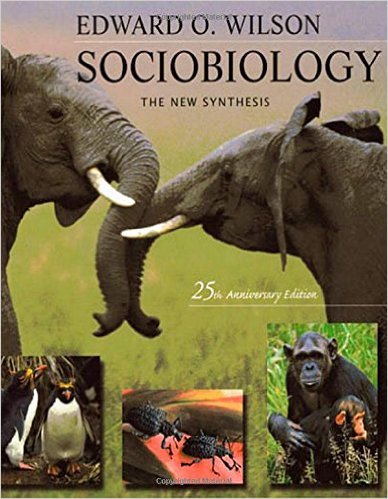
SUPPORT ESP: Order from Amazon
The ESP project will earn a commission.
This is the book that really started the notion of sociobiology. It came out just as I was starting graduate school and the animal-behavior group organized a discussion group around the book. I was very lucky to have my introduction to in-depth academic discourse be centered around such an interesting book. R. Robbins
ESP Picks from Around the Web (updated 28 JUL 2024 )
Old Science
Weird Science
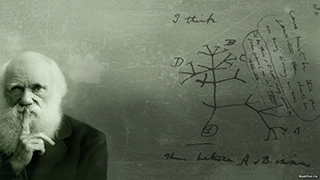
Treating Disease with Fecal Transplantation
Fossils of miniature humans (hobbits) discovered in Indonesia
Paleontology
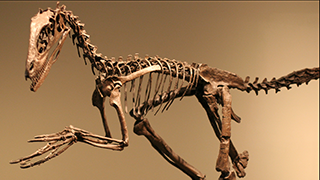
Dinosaur tail, complete with feathers, found preserved in amber.
Astronomy
Mysterious fast radio burst (FRB) detected in the distant universe.
Big Data & Informatics

Big Data: Buzzword or Big Deal?
Hacking the genome: Identifying anonymized human subjects using publicly available data.